
Is GLP-1 the Same as Ozempic?
GLP-1 refers to a broader class of medications that influence appetite, digestion, and food intake, while Ozempic is one specific medication containing semaglutide. At Cape Fear Physical Medicine and Rehab, Dr. Meisha K. Abbasinejad, MD, helps patients understand how GLP-1 options differ in their active ingredients, dosing schedules, potential benefits, and possible side effects. She reviews each patient’s medical history, current medications, previous weight-loss efforts, and personal goals before discussing which medically supervised option may be appropriate. Contact us today for more information, or simply schedule an appointment online! We are conveniently located at 1540 Purdue Dr, Ste. 200, in Fayetteville, NC 28303.
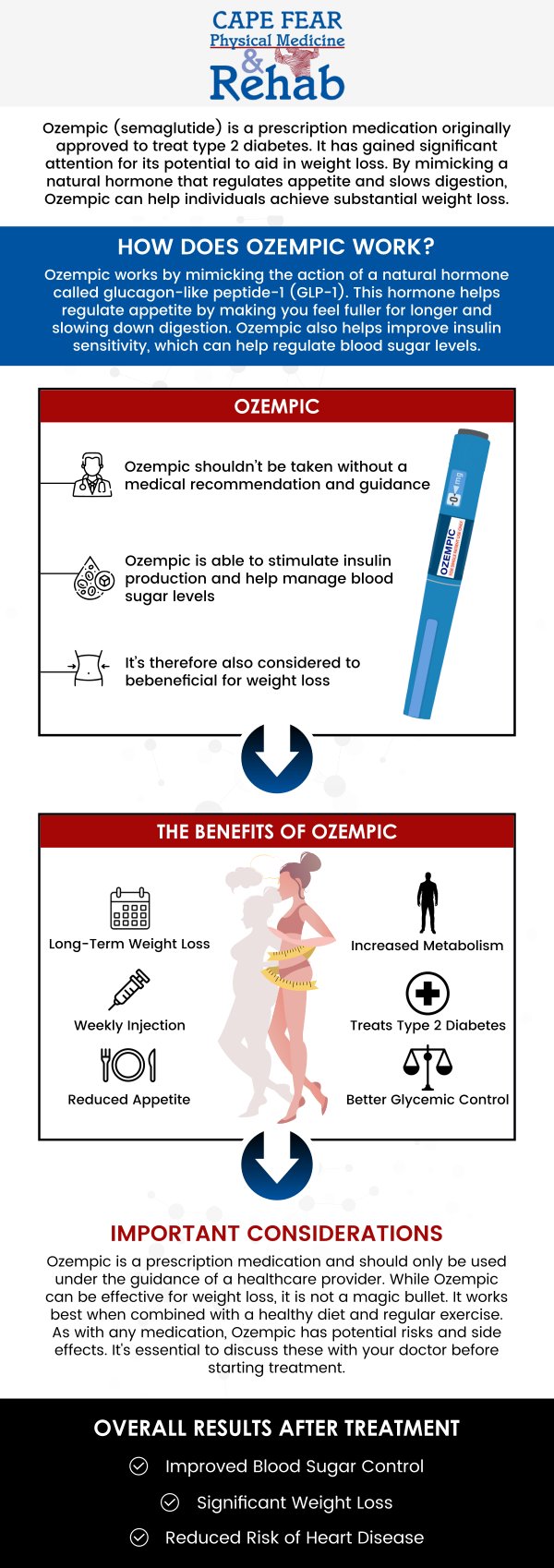
Table of Contents:
What is GLP-1, and how does it help with weight loss?
Is GLP-1 the same as Ozempic for weight loss?
Can GLP-1 help with weight loss even if I don’t have diabetes?
How often do I need to take Ozempic as a GLP-1 receptor agonist for weight loss?
How does Cape Fear Physical Medicine and Rehab help patients understand the difference between GLP-1 medications and Ozempic?
GLP-1 (Glucagon-like peptide-1) is a natural hormone that helps regulate appetite and promote weight loss. It works by slowing digestion and increasing feelings of fullness, which reduces overall calorie intake. At Cape Fear Physical Medicine and Rehab, we offer GLP-1 receptor agonist medications to support your weight loss journey.
These medications help curb cravings and make it easier to eat smaller portions, enhancing your ability to lose weight effectively. When combined with a personalized weight management plan, GLP-1 therapies can lead to significant and sustainable weight loss.
Our specialists carefully monitor each patient to ensure safe use and adjust treatment as needed. By integrating GLP-1 medications into your weight loss program, Cape Fear Physical Medicine and Rehab provides effective tools to help you achieve and maintain a healthier weight and improve your overall well-being.
At Cape Fear Physical Medicine and Rehab, we often get asked if GLP-1 and Ozempic are the same for weight loss. GLP-1 (glucagon-like peptide-1) is a natural hormone in the body that helps regulate appetite, digestion, and feelings of fullness, all important for managing weight.
Ozempic is a medication that contains a synthetic form of this hormone called a GLP-1 receptor agonist. It mimics the natural effects of GLP-1 to reduce appetite, slow digestion, and increase satiety, making it easier to eat less and lose weight. While Ozempic is based on GLP-1, it is a stable, long-acting medication designed to support sustainable weight loss.
We incorporate Ozempic into personalized weight loss plans when appropriate. This medication has been shown to help patients achieve significant and lasting weight reduction, especially when combined with lifestyle changes like diet and exercise. Our specialists carefully evaluate each patient to ensure that Ozempic is a safe and effective option for their weight management goals. This integrated approach helps patients achieve healthier weights and improve overall wellness.
GLP-1 medications can help with weight loss even if you don’t have diabetes. At Cape Fear Physical Medicine and Rehab, we offer GLP-1 receptor agonists like Wegovy, which are used for weight management in adults who are overweight or obese.
GLP-1 is a natural hormone that helps control appetite by slowing digestion and increasing feelings of fullness. These medications mimic GLP-1’s effects, reducing hunger and calorie intake, which supports effective and sustained weight loss.
Clinical studies have shown that patients using GLP-1 therapies often achieve greater weight loss than through diet and exercise alone. Our specialists integrate these medications into personalized weight management plans, combining medical treatment with nutrition guidance and physical activity support to maximize results.
While GLP-1 medications are effective, they may cause side effects such as nausea or digestive discomfort, which usually improve over time. They are carefully prescribed after evaluating each patient’s health history and suitability.
Ozempic, a GLP-1 receptor agonist, is typically taken once weekly to support weight loss. We offer medical weight loss treatments including Ozempic, Wegovy, Zepbound, and Mounjaro—GLP-1 medications that many patients seek for effective weight management. These medications work by reducing appetite, increasing feelings of fullness, and slowing digestion, which helps decrease calorie intake and promotes sustainable weight loss.
Treatment usually begins with a lower dose to help your body adjust comfortably. After about four weeks, the dose may be increased based on your response and weight loss goals. Following the prescribed schedule and injection instructions is essential for optimal results.
Consistency is key with Ozempic. Choose a convenient day each week for your injection and maintain that routine. If you miss a dose, take it as soon as possible within five days. If more than five days pass, skip the missed dose and continue with your next scheduled injection.
In addition to GLP-1 injectables, we also prescribe oral medications like Phentermine, Qsymia, and Contrave when appropriate. These oral options can complement your weight loss journey by supporting appetite control and metabolism. Our team closely monitors your progress, adjusting treatments as needed to ensure safe, effective, and sustainable weight loss tailored to your unique needs. With our comprehensive approach, you receive personalized care that addresses all aspects of weight management, including nutrition, exercise, and behavioral support, helping you achieve lasting health improvements.
At Cape Fear Physical Medicine and Rehab, Board-Certified Dr. Meisha K. Abbasinejad, MD, helps patients understand that GLP-1 refers to a hormone pathway and a broader class of medications, while Ozempic is a specific prescription medication containing semaglutide. Ozempic belongs to the GLP-1 receptor agonist class, but not every GLP-1 medication is Ozempic. Dr. Abbasinejad clearly explains how available options differ in their active ingredients, approved uses, dosing schedules, potential benefits, and possible side effects.
Dr. Abbasinejad also reviews each patient’s weight history, medical conditions, current medications, previous weight-loss efforts, lifestyle habits, and personal goals before discussing which treatment may be appropriate. At Cape Fear Physical Medicine and Rehab in Fayetteville, NC, ongoing follow-up allows her to monitor appetite, weight changes, treatment tolerance, and overall progress while helping patients make informed decisions about medically supervised weight-management care. Contact us today for more information, or simply schedule an appointment online! We are conveniently located at 1540 Purdue Dr, Ste. 200, in Fayetteville, NC 28303. We serve patients from Fayetteville NC, Woodfield NC, Hope Mills NC, Fort Bragg NC, Eastover NC, and surrounding areas.

Check Out Our 5 Star Reviews


Additional Services You May Like
▸ Weight Loss & Wellness Program
▸ Botox for Migraine
▸ EMG Nerve Conduction Studies
▸ Epidural Steroid Injections
▸ Radiofrequency Ablation
▸ Rehabilitation Consultations
▸ Facet Injections
▸ Sacroiliac Joint Injections
▸ Joint Injections
▸ Genicular Nerve Blocks
▸ Prosthetic Evaluation/Management
▸ Adjuvant Therapy/Care
▸ Spasticity Management
▸ Stroke Treatment
▸ Multiple Sclerosis
▸ Spinal Cord Injury
▸ Traumatic Brain Injury
▸ Lifestyle Medicine
▸ Phentermine
▸ Qsymia
▸ Contrave
▸ Lipo Injection
▸ B12 Injections

Additional Services You May Like
▸ Weight Loss & Wellness Program
▸ Botox for Migraine
▸ EMG Nerve Conduction Studies
▸ Epidural Steroid Injections
▸ Radiofrequency Ablation
▸ Rehabilitation Consultations
▸ Facet Injections
▸ Sacroiliac Joint Injections
▸ Joint Injections
▸ Genicular Nerve Blocks
▸ Prosthetic Evaluation/Management
▸ Adjuvant Therapy/Care
▸ Spasticity Management
▸ Stroke Treatment
▸ Multiple Sclerosis
▸ Spinal Cord Injury
▸ Traumatic Brain Injury
▸ Lifestyle Medicine
▸ Phentermine
▸ Qsymia
▸ Contrave
▸ Lipo Injection
▸ B12 Injections


 Send Text
 How May I Help You?