
Joint Injections for Chronic Pain Treatment in Fayetteville, NC
Joint injections may help reduce inflammation, ease persistent discomfort, and improve mobility when chronic pain is linked to an affected joint. At Cape Fear Physical Medicine and Rehab, Board-Certified Dr. Meisha K. Abbasinejad, MD, evaluates each patient’s symptoms, medical history, physical limitations, and treatment goals before determining whether an injection may be appropriate. Our team personalizes care according to the location and possible source of pain while providing ongoing follow-up to assess comfort, function, and overall response. For more information, contact us or schedule an appointment online. We are conveniently located at 1540 Purdue Dr, Ste. 200, in Fayetteville, NC 28303.
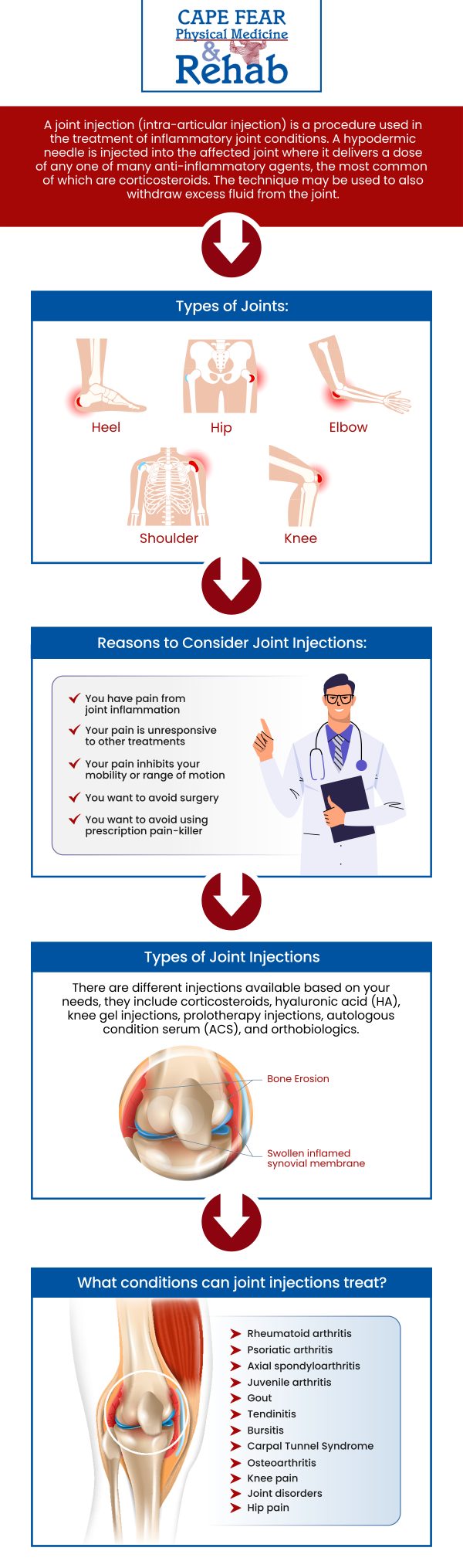
Table of Contents:
What are joint injections?
How do joint injections help relieve chronic pain?
What types of joint pain may be treated with injections?
Who may be a good candidate for joint injections?
Are joint injections painful?
How long does relief from a joint injection last?
How soon can normal activities resume after a joint injection?
What makes Dr. Meisha K. Abbasinejad, MD, a trusted choice for personalized joint injection care?
Joint injections are minimally invasive treatments that deliver medication directly into or around a painful joint to reduce inflammation, relieve discomfort, and improve movement. They may be recommended for persistent pain, swelling, or stiffness affecting the knees, hips, shoulders, elbows, wrists, ankles, or other joints. Conditions that may respond to injection care include osteoarthritis, inflammatory arthritis, bursitis, gout-related inflammation, and localized chronic joint pain. The injection may contain a corticosteroid, sometimes combined with a local anesthetic, and can provide relief lasting from several weeks to several months, although results vary. Patients may experience brief pressure, pinching, or temporary soreness during or after treatment, and many can resume light activities shortly afterward. At Cape Fear Physical Medicine & Rehab, Board-Certified Dr. Meisha K. Abbasinejad, MD, reviews each patient’s symptoms, medical history, mobility limitations, previous treatments, and goals before determining whether joint injections are appropriate. She also provides facet joint injections and epidural steroid injections as part of personalized pain management care in Fayetteville, NC.
Joint injections are minimally invasive procedures that deliver medication directly into or around a painful joint. They may be considered when ongoing discomfort, stiffness, or inflammation affects movement and daily activities. Commonly treated areas can include the knees, hips, shoulders, elbows, and other joints.
The injected medication may include a corticosteroid to reduce inflammation, sometimes combined with a local anesthetic for temporary numbing. Joint injections may help relieve pain and improve function for a period of time, although results and the duration of relief vary. A medical evaluation is necessary to identify the source of symptoms and determine whether an injection is appropriate.
At Cape Fear Physical Medicine and Rehab, Board-Certified Dr. Meisha K. Abbasinejad, MD, reviews each patient’s symptoms, medical history, mobility concerns, and treatment goals before recommending joint injection care. Follow-up helps assess pain relief, movement, function, and overall response to treatment.
Joint injections help relieve chronic pain by delivering medication directly into or around the affected joint. Corticosteroid medication may reduce inflammation, swelling, and irritation within the joint lining. Some injections also contain a local anesthetic, which may provide temporary numbing while the anti-inflammatory medication begins taking effect over the following days.
By decreasing inflammation and discomfort, an injection may make it easier to move the joint, complete daily activities, and follow appropriate exercise recommendations. Relief may last several weeks or months, although the duration and degree of improvement vary. Joint injections manage symptoms but do not necessarily correct the underlying cause, and repeated injections into the same area may not always be recommended.
At Cape Fear Physical Medicine and Rehab, we use joint injections as part of a personalized chronic pain plan when medically appropriate. Follow-up visits help her assess pain relief, mobility, functional improvement, medication tolerance, and whether additional care or adjustments are needed.
Joint injections may be used for pain associated with inflammation, swelling, stiffness, and certain chronic joint conditions. The medication is delivered directly into or around the affected area, allowing treatment to focus on a specific source of discomfort. Common treatment locations include the knees, hips, shoulders, elbows, wrists, and ankles.
Conditions that may be considered for injection care include:
• Osteoarthritis: Joint discomfort and stiffness related to cartilage changes
• Inflammatory arthritis: Swelling and pain associated with joint inflammation
• Bursitis: Irritation of the fluid-filled sacs that cushion joints
• Gout-related inflammation: Sudden swelling and discomfort caused by crystal buildup
• Persistent joint stiffness: Limited movement that affects everyday function
• Localized chronic joint pain: Ongoing discomfort confirmed to originate within or around a joint
At Cape Fear Physical Medicine and Rehab, Dr. Meisha K. Abbasinejad, MD, evaluates the location, pattern, severity, and possible source of pain before recommending treatment. She considers whether an injection fits the patient’s diagnosis, previous response to care, mobility needs, and overall health.
Joint injections may be considered for individuals with persistent joint pain, swelling, stiffness, or reduced mobility that interferes with work, exercise, sleep, or everyday activities. They may also be appropriate when oral medications, activity modifications, or other conservative measures have not provided sufficient relief. A medical evaluation is necessary to confirm that the discomfort is arising from the joint.
Potential candidates may include people who:
• Have arthritis-related inflammation or chronic joint discomfort
• Experience pain in the knee, hip, shoulder, elbow, wrist, or ankle
• Have stiffness or swelling that limits movement
• Need temporary symptom relief to participate more comfortably in daily activities
• Do not have an infection in or around the treatment area
• Have no serious allergy to the proposed medication
At Cape Fear Physical Medicine and Rehab, we review each patient’s symptoms, medical history, previous treatments, physical limitations, and goals before determining whether joint injections may be appropriate.
Joint injections may cause brief pressure, pinching, or mild discomfort as the needle enters the joint. A local anesthetic may be used to improve comfort, although temporary soreness or a short post-injection flare can occur afterward.
Relief may last from several weeks to several months, depending on the joint condition, medication used, and individual response. Results vary, and follow-up helps determine whether additional care is needed.
Many patients can return to light activities shortly after treatment, but strenuous exercise may need to be limited temporarily. Patients should follow the specific aftercare instructions provided by their physician.
Board-Certified Dr. Meisha K. Abbasinejad, MD, is a trusted choice for personalized joint injection care because she begins with a thorough evaluation of each patient’s symptoms, medical history, physical limitations, and treatment goals. She considers the location, pattern, and possible source of chronic joint pain before determining whether an injection may be appropriate, helping ensure that care is tailored rather than based on a one-size-fits-all plan. We also offer facet joint injections and epidural steroid injections as part of our personalized pain management services.
Dr. Abbasinejad also provides ongoing follow-up to monitor pain relief, mobility, function, and overall treatment response. At Cape Fear Physical Medicine and Rehab in Fayetteville, NC, she explains what patients can expect before, during, and after the procedure while adjusting recommendations according to individual progress and changing health needs. This patient-centered approach supports informed decisions and personalized chronic pain management. At Cape Fear Physical Medicine and Rehab, our medical professionals are experienced at helping people find relief from their pain with joint injections. Contact us today or book an appointment and learn how joint injections can help alleviate your chronic pain. We are conveniently located at 1540 Purdue Dr, Ste. 200, Fayetteville, NC 28303. We serve patients from Fayetteville NC, Woodfield NC, Hope Mills NC, Fort Bragg NC, Eastover NC, and surrounding areas.

Check Out Our 5 Star Reviews


Additional Services You May Like
▸ Weight Loss & Wellness Program
▸ Botox for Migraine
▸ EMG Nerve Conduction Studies
▸ Epidural Steroid Injections
▸ Radiofrequency Ablation
▸ Rehabilitation Consultations
▸ Facet Injections
▸ Sacroiliac Joint Injections
▸ Joint Injections
▸ Genicular Nerve Blocks
▸ Prosthetic Evaluation/Management
▸ Adjuvant Therapy/Care
▸ Spasticity Management
▸ Stroke Treatment
▸ Multiple Sclerosis
▸ Spinal Cord Injury
▸ Traumatic Brain Injury
▸ Lifestyle Medicine
▸ Phentermine
▸ Qsymia
▸ Contrave
▸ Lipo Injection
▸ B12 Injections

Additional Services You May Like
▸ Weight Loss & Wellness Program
▸ Botox for Migraine
▸ EMG Nerve Conduction Studies
▸ Epidural Steroid Injections
▸ Radiofrequency Ablation
▸ Rehabilitation Consultations
▸ Facet Injections
▸ Sacroiliac Joint Injections
▸ Joint Injections
▸ Genicular Nerve Blocks
▸ Prosthetic Evaluation/Management
▸ Adjuvant Therapy/Care
▸ Spasticity Management
▸ Stroke Treatment
▸ Multiple Sclerosis
▸ Spinal Cord Injury
▸ Traumatic Brain Injury
▸ Lifestyle Medicine
▸ Phentermine
▸ Qsymia
▸ Contrave
▸ Lipo Injection
▸ B12 Injections


 Send Text
 How May I Help You?