
What Is an EMG Nerve Conduction Study?
An EMG Nerve Conduction Study is a diagnostic procedure used to measure the electrical activity in your muscles and nerves. This test helps evaluate nerve function and identify any irregularities in how electrical signals travel through your nerves. At Cape Fear Physical Medicine and Rehab, our professional team uses this study to assess nerve health, providing valuable insights that guide the creation of a personalized treatment plan aimed at improving your recovery and overall well-being. Contact us today for more information, or simply schedule an appointment online! We are conveniently located at 1540 Purdue Dr, Ste. 200, in Fayetteville, NC 28303.
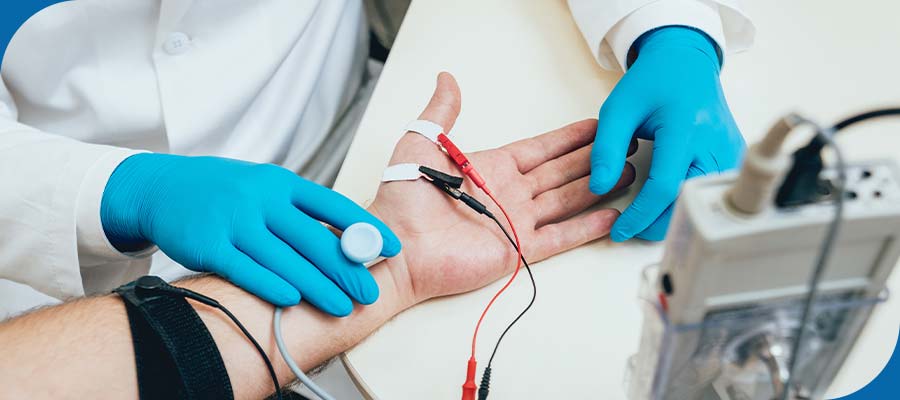
Table of Contents:
What is an EMG nerve conduction study?
What does an EMG nerve conduction test diagnose?
Why may an EMG nerve conduction study be recommended?
What happens during an EMG nerve conduction study?
Are there any restrictions after an EMG nerve conduction study?
Can an EMG nerve conduction study identify the location of nerve damage?
When are EMG nerve conduction study results available?
How Does Dr. Meisha K. Abbasinejad, MD, Personalize an EMG Nerve Conduction Study?
If you are dealing with unexplained nerve pain or muscle weakness, a nerve conduction study/electromyogram (EMG) may be able to provide you with answers regarding the source of your pain. At Cape Fear Physical Medicine and Rehab, we have physicians who are highly trained in completing these tests. Your doctor may refer you for this test if he/she is concerned you may have nerve injury or damage or a muscle disorder.
This test measures the electrical activity of your nerves and their interaction with your muscles. Nerves communicate with muscles to “tell them” to contract by sending electrical signals. Nerve conduction studies involve a small electrical stimulus (“shock”) to one part of a nerve with measurement of how long it takes to get to another part of the nerve or to a muscle. Your values are compared to normal values to see if there is any slowing of the conduction or if the waveform is smaller than it should be.
The EMG portion of the test consists of a small “pin electrode”, which just looks like a tiny needle. This needle is inserted into different muscles, and the doctor interprets the electrical waveforms of the muscle on a screen. There are no more “shocks” occurring. The muscle is tested when it’s relaxed, and then you will be asked to contract that specific muscle and the waveforms are evaluated again. Based on how many nerves or muscles are being tested, this test generally takes between 30-45 minutes. You can take any of your usual medications, and you can eat before the test. If you wear lotion, we ask that you don’t put it on the arm or leg that is being tested prior to your appointment.
• Peripheral nerve entrapments (carpal or cubital tunnel; tarsal tunnel; “foot drop” – peroneal/fibular nerve injury)
• Neuropathy
• Radiculopathy (pinched nerve in the back or neck)
• Myopathy (muscle disorder with weakness)
• Guillain-Barré syndrome
• Polymyositis
• Acute or Chronic Inflammatory Demyelinating Polyneuropathy
• Nerve injuries from trauma or fractures – can help determine the likelihood and prognosis for recovery
At Cape Fear Physical Medicine and Rehab, we are committed to providing precise diagnostics and effective treatments tailored to your needs. Our skilled team ensures you receive the highest standard of pain management, supporting you throughout your recovery journey. If you’re seeking expert evaluation and care for nerve-related concerns, we are here to help.
An EMG nerve conduction study may be recommended when symptoms suggest that the nerves or muscles are not functioning normally. These symptoms can include persistent numbness, tingling, burning sensations, muscle weakness, cramping, unexplained pain, or reduced coordination. The study measures electrical activity within the muscles and evaluates how effectively electrical signals travel through the nerves.
The results can help a physician identify where a problem is located and determine whether symptoms may be associated with a compressed nerve, peripheral neuropathy, nerve-root irritation, muscle disorder, or another neuromuscular condition. The study may also help distinguish a nerve-related problem from a muscle-related condition and guide decisions about further evaluation or treatment.
At Cape Fear Physical Medicine and Rehab, an EMG nerve conduction study may be considered after reviewing the individual’s symptoms, medical history, and physical examination findings. Our team uses the study findings alongside the clinical evaluation to better understand the source of nerve or muscle symptoms and develop an appropriate, personalized care plan.
During the nerve conduction portion of the study, small electrodes are placed on the skin over specific nerves and muscles. Brief electrical impulses stimulate the nerve while the equipment records how quickly and effectively the signal travels. Patients may feel a quick tingling or tapping sensation, but each stimulation lasts only a moment.
During the EMG portion, a physician carefully inserts a thin, sterile needle electrode into selected muscles. The patient may be asked to relax and then gently tighten the muscle while its electrical activity is recorded. The number of muscles examined depends on the symptoms and suspected condition, and the complete study commonly takes about 30 to 60 minutes.
At Cape Fear Physical Medicine and Rehab, the EMG nerve conduction study is tailored to the individual’s symptoms, medical history, and examination findings. The results help us evaluate nerve and muscle function, identify the possible location of a problem, and guide recommendations for appropriate care.
Most individuals can return to their usual activities after an EMG nerve conduction study unless their physician provides different instructions. Mild muscle soreness or minor bruising may occur where the needle electrode was inserted. These effects are generally temporary, but persistent or worsening symptoms should be reported to the physician.
An EMG nerve conduction study can help determine whether a problem involves a particular nerve, nerve root, muscle, or group of muscles. It measures how electrical signals travel through the nerves and records electrical activity within selected muscles. These findings may help identify the location and extent of a neuromuscular abnormality.
Initial findings may sometimes be discussed shortly after the study, depending on how the evaluation is performed. A detailed report may also be prepared and sent to the referring physician for review. The results are considered alongside other clinical information before a diagnosis or care recommendation is made.
Dr. Meisha K. Abbasinejad, MD, personalizes an EMG nerve conduction study by first reviewing the patient’s symptoms, medical history, physical examination findings, and the specific areas affected by numbness, tingling, weakness, or pain. Based on this information, she determines which nerves and muscles should be evaluated so the study is focused on the patient’s individual concerns rather than following a one-size-fits-all approach.
During the study, Dr. Meisha K. Abbasinejad, MD, adjusts the evaluation according to the patient’s responses and the electrical findings recorded. At Cape Fear Physical Medicine and Rehab, she interprets the results alongside the clinical examination to help identify the location and nature of a possible nerve or muscle problem and guide appropriate next steps for care. Contact us today or schedule an appointment to learn more about EMG Nerve Conduction Studies and how we can assist in your healing process. We are conveniently located at 1540 Purdue Dr, Ste. 200, in Fayetteville, NC 28303. We serve patients from Fayetteville NC, Woodfield NC, Hope Mills NC, Fort Bragg NC, Eastover NC, and surrounding areas.

Check Out Our 5 Star Reviews


Additional Services You May Like
▸ Weight Loss & Wellness Program
▸ Botox for Migraine
▸ EMG Nerve Conduction Studies
▸ Epidural Steroid Injections
▸ Radiofrequency Ablation
▸ Rehabilitation Consultations
▸ Facet Injections
▸ Sacroiliac Joint Injections
▸ Joint Injections
▸ Genicular Nerve Blocks
▸ Prosthetic Evaluation/Management
▸ Adjuvant Therapy/Care
▸ Spasticity Management
▸ Stroke Treatment
▸ Multiple Sclerosis
▸ Spinal Cord Injury
▸ Traumatic Brain Injury
▸ Lifestyle Medicine
▸ Phentermine
▸ Qsymia
▸ Contrave
▸ Lipo Injection
▸ B12 Injections

Additional Services You May Like
▸ Weight Loss & Wellness Program
▸ Botox for Migraine
▸ EMG Nerve Conduction Studies
▸ Epidural Steroid Injections
▸ Radiofrequency Ablation
▸ Rehabilitation Consultations
▸ Facet Injections
▸ Sacroiliac Joint Injections
▸ Joint Injections
▸ Genicular Nerve Blocks
▸ Prosthetic Evaluation/Management
▸ Adjuvant Therapy/Care
▸ Spasticity Management
▸ Stroke Treatment
▸ Multiple Sclerosis
▸ Spinal Cord Injury
▸ Traumatic Brain Injury
▸ Lifestyle Medicine
▸ Phentermine
▸ Qsymia
▸ Contrave
▸ Lipo Injection
▸ B12 Injections


 Send Text
 How May I Help You?