
How Does GLP-1 Support Weight Loss in Fayetteville, NC?
GLP-1 medications may support weight loss by acting on brain regions involved in appetite and food intake, helping eligible patients manage hunger and consume fewer calories. Board-certified Dr. Meisha K. Abbasinejad, MD, at Cape Fear Physical Medicine and Rehab evaluates each patient’s medical history, current weight, previous weight-loss efforts, medications, lifestyle habits, and personal goals before determining whether GLP-1 treatment is appropriate. Contact us today for more information, or simply schedule an appointment online! We are conveniently located at 1540 Purdue Dr, Ste. 200, in Fayetteville, NC 28303.
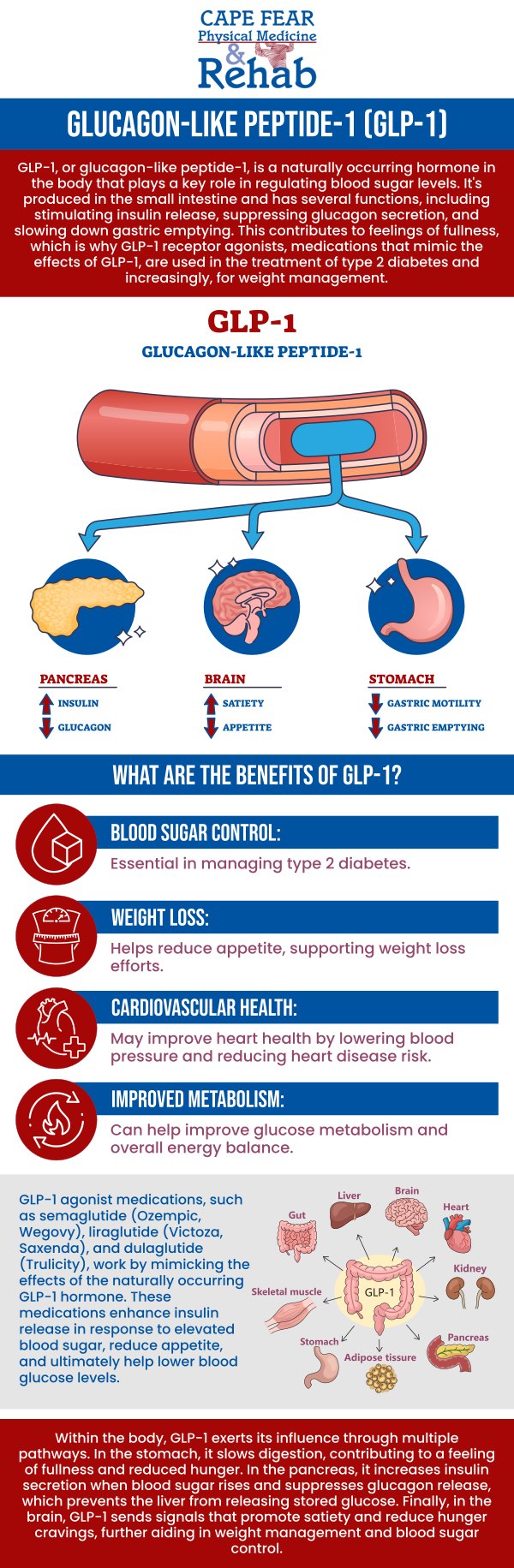
Table of Contents:
What are GLP-1 medications?
How do GLP-1 medications help with weight loss?
What is the monthly cost of GLP-1?
What are the most common GLP-1 medications used for weight loss?
Who is a good candidate for GLP-1 weight loss medications?
How does Cape Fear Physical Medicine and Rehab personalize GLP-1 weight loss care in Fayetteville, NC?
GLP-1 medications are prescription treatments that mimic glucagon-like peptide-1, a natural hormone involved in appetite regulation and digestion. By activating GLP-1 receptors, these medicines can help reduce hunger, increase feelings of fullness, and support lower calorie intake. They are used as part of a broader medical weight-management plan rather than as a stand-alone solution.
Weight-loss options in this category include weekly injections, daily injections, and newer oral tablets. Their active ingredients, dosing schedules, expected results, and side-effect profiles differ. Some medications act only on GLP-1 receptors, while tirzepatide also targets GIP receptors. All are intended to be combined with a reduced-calorie eating plan and increased physical activity.
At Cape Fear Physical Medicine and Rehab, our team reviews each patient’s weight history, health concerns, medications, lifestyle habits, and goals before recommending treatment. Ongoing follow-up helps ensure that the selected option remains appropriate, effective, and well tolerated.
GLP-1 medications help with weight loss mainly by reducing appetite and calorie intake. They influence areas of the brain involved in hunger and food-related reward, which may help patients feel less interested in food, become satisfied with smaller portions, and experience fewer urges to overeat. These changes can make a structured eating plan easier to follow.
Many GLP-1 medicines also slow stomach emptying, helping fullness last longer after meals. Weight loss usually develops gradually and depends on the medication, dose, consistency, nutrition, physical activity, sleep, stress, and individual response. These treatments do not replace healthy habits; they support patients while sustainable routines are developed and maintained.
At Cape Fear Physical Medicine and Rehab, Board-Certified Dr. Meisha K. Abbasinejad, MD, combines appropriate medication with personalized nutrition, activity, and lifestyle guidance. Regular visits allow her to review appetite, cravings, weight changes, side effects, and treatment tolerance, then adjust the plan when medically appropriate.
The monthly cost of a GLP-1 weight-loss medication can vary widely depending on the specific medication, prescribed dose, pharmacy pricing, and available manufacturer savings programs. In many cases, monthly costs may range from approximately $25 to more than $1,300. Lower prices are generally associated with eligible savings programs, while full retail costs may be considerably higher.
Patients should confirm the expected price before beginning treatment because medication costs and discount programs may change. It is also important to consider that the most affordable option may not always be the most medically appropriate. The medication’s effectiveness, dosing schedule, possible side effects, and suitability for the patient’s health needs should all be reviewed before a decision is made.
At Cape Fear Physical Medicine and Rehab in Fayetteville, NC, Board-Certified Dr. Meisha K. Abbasinejad, MD, discusses medically appropriate GLP-1 weight-loss options before treatment begins. She considers each patient’s health history, treatment goals, dosing preferences, expected benefits, and overall weight-management needs when developing a personalized plan.
The most common GLP-1 medications offered for weight loss include Ozempic, Wegovy, and Mounjaro. These prescription treatments influence appetite-related pathways, helping eligible patients feel fuller for longer, reduce hunger, and consume fewer calories. They are generally used as part of a medically supervised plan that also includes balanced nutrition and regular physical activity.
Ozempic and Wegovy contain semaglutide, while Mounjaro contains tirzepatide, which targets both GLP-1 and GIP receptors. Although these medications have similar appetite-regulating effects, their doses, treatment schedules, potential side effects, and suitability may differ. The right choice depends on the patient’s medical history, weight-management needs, previous efforts, and individual treatment response.
At Cape Fear Physical Medicine and Rehab, we offer medically supervised weight-loss options that include Ozempic, Wegovy, and Mounjaro. We evaluate each patient carefully and provide regular monitoring to determine which medication may appropriately support safe, realistic, and sustainable weight-management goals.
A good candidate for GLP-1 weight-loss medication is generally an adult with obesity or an adult with overweight who also has at least one weight-related health concern, such as high blood pressure, high cholesterol, or obstructive sleep apnea. Candidates should also be willing to combine medication with healthier eating, regular activity, and ongoing medical follow-up.
The evaluation may include:
• Body mass index and weight history
• Previous weight-loss efforts
• Current medications and possible interactions
• Digestive, pancreatic, gallbladder, kidney, and liver health
• Pregnancy or plans for pregnancy
• Personal or family history of medullary thyroid carcinoma or MEN 2
• Ability to follow dosing and monitoring recommendations
At Cape Fear Physical Medicine and Rehab, our skilled team completes a personalized assessment before recommending treatment. We discuss expected benefits, possible side effects, contraindications, and long-term goals to determine whether a GLP-1 medication is appropriate and safe for the individual patient.
Board-Certified Dr. Meisha K. Abbasinejad, MD, personalizes GLP-1 weight-loss care by reviewing each patient’s current weight, body mass index, weight history, previous weight-loss efforts, medical conditions, medications, eating patterns, activity level, and personal goals. She also evaluates potential risk factors and discusses the available medication options, expected benefits, dosing requirements, and possible side effects before determining whether GLP-1 treatment may be appropriate.
At Cape Fear Physical Medicine and Rehab in Fayetteville, NC, Dr. Abbasinejad combines medically appropriate GLP-1 treatment with individualized recommendations for nutrition, physical activity, and sustainable lifestyle habits. Regular follow-up appointments allow her to monitor appetite, weight changes, medication tolerance, and overall progress, making adjustments when needed to support realistic and long-term weight-management goals.
Contact us today for more information, or simply schedule an appointment online! We are conveniently located at 1540 Purdue Dr, Ste. 200, in Fayetteville, NC 28303. We serve patients from Fayetteville NC, Woodfield NC, Hope Mills NC, Fort Bragg NC, Eastover NC, and surrounding areas.

Check Out Our 5 Star Reviews


Additional Services You May Like
▸ Weight Loss & Wellness Program
▸ Botox for Migraine
▸ EMG Nerve Conduction Studies
▸ Epidural Steroid Injections
▸ Radiofrequency Ablation
▸ Rehabilitation Consultations
▸ Facet Injections
▸ Sacroiliac Joint Injections
▸ Joint Injections
▸ Genicular Nerve Blocks
▸ Prosthetic Evaluation/Management
▸ Adjuvant Therapy/Care
▸ Spasticity Management
▸ Stroke Treatment
▸ Multiple Sclerosis
▸ Spinal Cord Injury
▸ Traumatic Brain Injury
▸ Lifestyle Medicine
▸ Phentermine
▸ Qsymia
▸ Contrave
▸ Lipo Injection
▸ B12 Injections

Additional Services You May Like
▸ Weight Loss & Wellness Program
▸ Botox for Migraine
▸ EMG Nerve Conduction Studies
▸ Epidural Steroid Injections
▸ Radiofrequency Ablation
▸ Rehabilitation Consultations
▸ Facet Injections
▸ Sacroiliac Joint Injections
▸ Joint Injections
▸ Genicular Nerve Blocks
▸ Prosthetic Evaluation/Management
▸ Adjuvant Therapy/Care
▸ Spasticity Management
▸ Stroke Treatment
▸ Multiple Sclerosis
▸ Spinal Cord Injury
▸ Traumatic Brain Injury
▸ Lifestyle Medicine
▸ Phentermine
▸ Qsymia
▸ Contrave
▸ Lipo Injection
▸ B12 Injections


 Send Text
 How May I Help You?