

Can an EMG Test Diagnose Burning, Tingling, or Numbness in Feet?
An EMG test, often performed alongside nerve conduction studies, can help evaluate whether burning, tingling, or numbness in the feet is associated with abnormal nerve or muscle function. At Cape Fear Physical Medicine and Rehab, Dr. Meisha K. Abbasinejad, MD, reviews the test findings together with the patient’s symptoms, medical history, and physical examination. This comprehensive evaluation can help identify or rule out certain nerve and muscle conditions and guide appropriate recommendations for managing persistent foot discomfort. Contact us today for more information, or simply schedule an appointment online! We are conveniently located at 1540 Purdue Dr, Ste. 200, in Fayetteville, NC 28303.
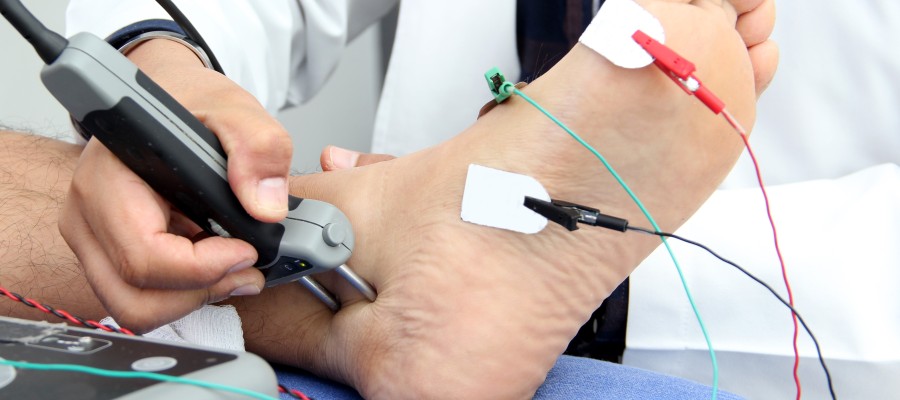
Table of Contents:
How can an EMG test help evaluate burning, tingling, or numbness in the feet?
When should persistent foot numbness or tingling be evaluated with EMG testing?
How are EMG test results used to guide the next steps in care?
Is an EMG test appropriate when foot symptoms affect balance or walking?
How does Dr. Meisha K. Abbasinejad, MD, evaluate foot numbness with EMG testing in Fayetteville, NC?
An EMG test can help evaluate burning, tingling, or numbness in the feet by examining how well the nerves and muscles are functioning. These symptoms may be associated with peripheral neuropathy, nerve compression, nerve-root irritation, or certain muscle and neurological conditions. EMG testing provides objective information that helps determine whether abnormal nerve or muscle activity may be contributing to the discomfort.
The evaluation commonly includes nerve conduction studies and needle electromyography. Nerve conduction studies measure the speed and strength of electrical signals traveling through selected nerves, while needle EMG records electrical activity within specific muscles. Together, these tests can help identify the location, type, and possible severity of nerve or muscle dysfunction.
At Cape Fear Physical Medicine and Rehab, Dr. Meisha K. Abbasinejad, MD, reviews the EMG findings alongside the patient’s symptoms, medical history, and physical examination. This comprehensive evaluation helps her determine the possible source of burning, tingling, or numbness and develop appropriate recommendations based on the patient’s individual needs.
Persistent foot numbness or tingling should be evaluated when symptoms do not improve, become more frequent, or begin interfering with walking and daily activities. A physician may recommend EMG and nerve conduction testing when the symptoms suggest a possible problem involving the peripheral nerves, nerve roots, or muscles.
• Symptoms persist or repeatedly return: Ongoing numbness or tingling may require further evaluation to identify possible nerve dysfunction.
• Symptoms gradually worsen: Increasing intensity, frequency, or spread of the sensations may indicate a progressing nerve-related condition.
• Muscle weakness develops: Difficulty lifting the foot, moving the toes, climbing stairs, or maintaining strength may warrant EMG testing.
• Walking or balance becomes difficult: Numbness combined with instability, stumbling, or changes in gait should be assessed.
• Symptoms affect both feet: Bilateral numbness or tingling may be associated with peripheral neuropathy or another widespread nerve condition.
• Foot symptoms occur with back or leg pain: Radiating pain, tingling, or numbness may suggest irritation or compression of a spinal nerve root.
• A nerve-compression condition is suspected: EMG testing may help evaluate conditions affecting individual nerves, including possible tarsal tunnel syndrome.
• The cause remains unclear: Testing may help distinguish whether symptoms originate from a peripheral nerve, nerve root, or muscle disorder.
• The patient has a condition associated with nerve problems: Diabetes and certain other medical conditions may increase the likelihood of peripheral nerve dysfunction.
At Cape Fear Physical Medicine and Rehab, we review each patient’s symptoms, medical history, and physical examination before determining whether EMG testing is appropriate. She interprets the findings alongside the complete clinical evaluation to help identify the possible source of persistent foot numbness or tingling and guide the next steps in care.
EMG and nerve conduction study results help determine whether symptoms are related to abnormal nerve or muscle function. The findings may identify the location and pattern of dysfunction, such as a peripheral nerve problem, nerve compression, spinal nerve-root irritation, widespread neuropathy, or a muscle disorder. They may also provide information about the severity and duration of the abnormality.
The results are interpreted together with the patient’s symptoms, medical history, and physical examination. Depending on the findings, the next steps may include laboratory testing, diagnostic imaging, medication management, rehabilitation recommendations, lifestyle modifications, or referral to another specialist. Normal EMG results can also help rule out certain conditions and guide the physician toward other possible causes of the symptoms.
At Cape Fear Physical Medicine and Rehab, Dr. Meisha K. Abbasinejad, MD, uses EMG results as one part of a comprehensive evaluation. We explain the findings, consider how they relate to the patient’s burning, tingling, numbness, pain, or weakness, and develop personalized recommendations for the appropriate next steps in care.
An EMG test may be appropriate when numbness, tingling, burning, or weakness in the feet begins affecting balance, walking, or coordination. These difficulties may occur when damaged or compressed nerves interfere with sensation or muscle control. EMG and nerve conduction studies evaluate how well the nerves transmit electrical signals and how the muscles respond.
Testing may help determine whether walking problems are associated with peripheral neuropathy, an irritated spinal nerve root, a localized nerve problem, or certain muscle disorders. However, balance difficulties can have several possible causes, so EMG results should be considered alongside the patient’s medical history, neurological and physical examination, and any additional testing that may be needed.
At Cape Fear Physical Medicine and Rehab, we evaluate each patient’s symptoms, strength, sensation, reflexes, gait, and balance before recommending EMG testing. She uses the findings to identify possible nerve or muscle dysfunction and guide personalized next steps in care.
Board-Certified Dr. Meisha K. Abbasinejad, MD, begins by reviewing the patient’s symptoms, medical history, current health conditions, medications, and factors that may contribute to foot numbness. She may also assess sensation, muscle strength, reflexes, walking pattern, and whether symptoms extend into the legs or are associated with back pain. Based on this evaluation, Dr. Abbasinejad determines which nerves and muscles should be examined through nerve conduction studies and needle electromyography.
Nerve conduction studies measure the strength and speed of electrical signals traveling through selected nerves, while needle EMG evaluates electrical activity within the muscles. Dr. Abbasinejad interprets these results alongside the patient’s examination to determine whether symptoms may be associated with peripheral neuropathy, nerve compression, spinal nerve-root irritation, or muscle dysfunction. At Cape Fear Physical Medicine and Rehab, these findings help her explain the possible source of foot numbness and recommend appropriate next steps in care.
Contact us today for more information, or simply schedule an appointment online! We are conveniently located at 1540 Purdue Dr, Ste. 200, in Fayetteville, NC 28303. We serve patients from Fayetteville NC, Woodfield NC, Hope Mills NC, Fort Bragg NC, Eastover NC, and surrounding areas.

Check Out Our 5 Star Reviews


Additional Services You May Like
▸ Weight Loss & Wellness Program
▸ Botox for Migraine
▸ EMG Nerve Conduction Studies
▸ Epidural Steroid Injections
▸ Radiofrequency Ablation
▸ Rehabilitation Consultations
▸ Facet Injections
▸ Sacroiliac Joint Injections
▸ Joint Injections
▸ Genicular Nerve Blocks
▸ Prosthetic Evaluation/Management
▸ Adjuvant Therapy/Care
▸ Spasticity Management
▸ Stroke Treatment
▸ Multiple Sclerosis
▸ Spinal Cord Injury
▸ Traumatic Brain Injury
▸ Lifestyle Medicine
▸ Phentermine
▸ Qsymia
▸ Contrave
▸ Lipo Injection
▸ B12 Injections

Additional Services You May Like
▸ Weight Loss & Wellness Program
▸ Botox for Migraine
▸ EMG Nerve Conduction Studies
▸ Epidural Steroid Injections
▸ Radiofrequency Ablation
▸ Rehabilitation Consultations
▸ Facet Injections
▸ Sacroiliac Joint Injections
▸ Joint Injections
▸ Genicular Nerve Blocks
▸ Prosthetic Evaluation/Management
▸ Adjuvant Therapy/Care
▸ Spasticity Management
▸ Stroke Treatment
▸ Multiple Sclerosis
▸ Spinal Cord Injury
▸ Traumatic Brain Injury
▸ Lifestyle Medicine
▸ Phentermine
▸ Qsymia
▸ Contrave
▸ Lipo Injection
▸ B12 Injections


 Send Text
 How May I Help You?