
The Relationship Between Cholesterol and Weight
Body weight and cholesterol levels can influence one another, particularly when excess weight is associated with dietary habits, limited physical activity, or other metabolic concerns. Losing even a portion of excess weight may support healthier cholesterol patterns when combined with balanced nutrition, regular movement, and consistent medical monitoring. At Cape Fear Physical Medicine and Rehab, our professional team helps patients understand how weight management may contribute to cardiovascular wellness and develop personalized strategies based on their health history, laboratory findings, and long-term goals. Contact us today for more information or schedule an appointment online. We are conveniently located at 1540 Purdue Dr, Ste. 200, in Fayetteville, NC 28303.
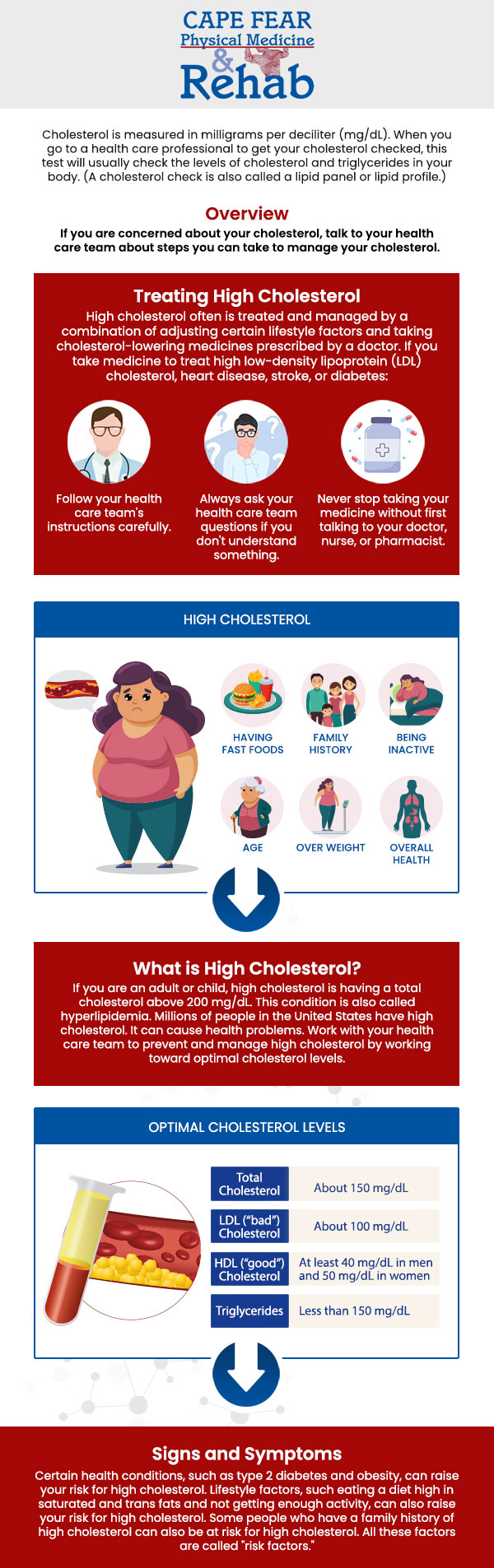
Table of Contents:
What are the causes of high cholesterol?
Does cholesterol affect weight?
Does reducing cholesterol reduce weight?
What is the connection between cholesterol and weight?
How Does Dr. Meisha K. Abbasinejad, MD, Help Patients Understand the Relationship Between Cholesterol and Weight?
Cholesterol is a waxy compound found in the body. The body needs cholesterol to build healthy cells, however, high levels of cholesterol are linked to an increased risk of heart disease. High cholesterol in the bloodstream can lead to fatty deposits in the blood vessels. As these deposits grow, blood flow becomes restricted in the arteries. These fatty deposits can suddenly break free and form clots that may cause a stroke or heart attack.
High cholesterol is most often the result of poor lifestyle choices, but it can also be inherited. If you have high cholesterol due to lifestyle choices, it can be treated and changed through diet and exercise, and if necessary, medication.
Cholesterol moves through the bloodstream attached to proteins. This combination of cholesterol and proteins is what makes up a lipoprotein. Different kinds of cholesterol are dependent on what the lipoprotein carries. These are:
• Low-density lipoproteins (LDL). This is the bad cholesterol. LDL cholesterol can build up on the walls of the arteries and make them narrow and hard.
• High-density lipoproteins (HDL). This is the good cholesterol. This is the stuff that collects cholesterol and takes it back to the liver.
Factors that contribute to cholesterol problems are inactivity, an unhealthy diet, and obesity. These increase cholesterol and triglyceride levels. Other factors can contribute to high cholesterol levels, such as genetic makeup that makes it difficult for the body to remove LDL cholesterol from the blood, or decreases the ability of the liver to break it down.
These are medical conditions that can cause high cholesterol levels:
• Diabetes
• Chronic kidney disease
• HIV/AIDS
• Hypothyroidism
• Lupus
Medications can make cholesterol problems worse, such as medications for:
• Acne
• Cancer
• HIV/AIDS
• Hypertension
• Irregular heart rhythms
• Organ transplants
Cholesterol does not usually cause weight gain directly. It is a waxy substance the body uses for essential functions, but elevated cholesterol does not add body fat or automatically increase body weight. Cholesterol and weight may change together because factors such as diet, physical activity, genetics, age, and overall metabolic health can influence both.
The relationship more commonly works in the opposite direction, as excess body weight may contribute to higher LDL cholesterol and triglycerides and lower HDL cholesterol. Gradual weight loss, balanced nutrition, and regular physical activity may help improve cholesterol levels. However, people at any weight can develop high cholesterol, which is why laboratory testing is important for understanding individual cardiovascular risk.
At Cape Fear Physical Medicine and Rehab in Fayetteville, NC, board-certified physician Dr. Meisha K. Abbasinejad, MD, evaluates weight concerns alongside cholesterol results, health history, lifestyle habits, and personal wellness goals. We provide individualized guidance to help patients understand their risk factors and make sustainable changes that may support healthier weight and cholesterol levels.
Reducing cholesterol does not automatically cause weight loss because cholesterol levels and body weight are separate health measurements. Cholesterol is a fatty substance carried in the blood, while body weight is influenced by calorie intake, physical activity, muscle mass, body fat, genetics, sleep, and other health factors. A person’s cholesterol may improve without a noticeable change on the scale.
However, many habits used to support healthier cholesterol levels may also promote weight loss. Eating more vegetables, fruits, whole grains, and lean protein, limiting highly processed foods and saturated fats, and increasing regular physical activity can improve cardiovascular health while helping create a calorie balance that supports gradual weight reduction. Even modest weight loss may help improve cholesterol levels, but individual results vary.
At Cape Fear Physical Medicine and Rehab in Fayetteville, NC, board-certified physician Dr. Meisha K. Abbasinejad, MD, evaluates cholesterol results alongside weight history, lifestyle habits, and personal wellness goals. We provide individualized guidance to help patients make sustainable changes that may support healthier cholesterol levels, weight management, and overall well-being.
Cholesterol and body weight are related, but one does not directly determine the other. Excess body weight can be associated with higher LDL cholesterol and triglycerides and lower HDL cholesterol. However, people at any weight can have unhealthy cholesterol levels because genetics, age, diet, physical activity, smoking, and other health factors also affect the way the body produces and processes cholesterol.
Weight management may support healthier cholesterol levels, especially when it includes balanced nutrition and regular physical activity. Gradual weight loss may help lower LDL cholesterol and triglycerides while supporting healthier HDL levels. Still, losing weight does not guarantee that every cholesterol measurement will return to a healthy range, so a lipid blood test and individualized medical evaluation remain important.
At Cape Fear Physical Medicine and Rehab in Fayetteville, NC, board-certified physician Dr. Meisha K. Abbasinejad, MD, evaluates cholesterol results alongside weight history, lifestyle habits, and overall health. We help patients understand their individual risk factors and develop sustainable strategies that may support healthier weight, cholesterol levels, and long-term cardiovascular wellness.
Dr. Meisha K. Abbasinejad, MD, is a board-certified physician who helps patients understand the relationship between cholesterol and weight by reviewing their health history, laboratory results, dietary habits, activity level, and weight-management goals. She explains that excess body weight may be associated with changes in cholesterol and triglyceride levels, although weight is only one of several contributing factors. Genetics, age, nutrition, physical activity, and existing health concerns may also influence an individual’s cholesterol profile.
Dr. Abbasinejad uses this information to provide personalized guidance focused on improving overall wellness. We help patients identify realistic changes involving balanced nutrition, regular movement, and gradual weight management while monitoring progress when appropriate. Our goal is to help each patient better understand their cardiovascular health and make informed decisions that support healthier weight and cholesterol levels. Contact us today or schedule an appointment to learn how we can assist you in your journey toward better health. We are conveniently located at 1540 Purdue Dr, Ste. 200, in Fayetteville, NC 28303. We serve patients from Fayetteville NC, Woodfield NC, Hope Mills NC, Fort Bragg NC, Eastover NC, and surrounding areas.

Check Out Our 5 Star Reviews


Additional Services You May Like
▸ Weight Loss & Wellness Program
▸ Botox for Migraine
▸ EMG Nerve Conduction Studies
▸ Epidural Steroid Injections
▸ Radiofrequency Ablation
▸ Rehabilitation Consultations
▸ Facet Injections
▸ Sacroiliac Joint Injections
▸ Joint Injections
▸ Genicular Nerve Blocks
▸ Prosthetic Evaluation/Management
▸ Adjuvant Therapy/Care
▸ Spasticity Management
▸ Stroke Treatment
▸ Multiple Sclerosis
▸ Spinal Cord Injury
▸ Traumatic Brain Injury
▸ Lifestyle Medicine
▸ Phentermine
▸ Qsymia
▸ Contrave
▸ Lipo Injection
▸ B12 Injections

Additional Services You May Like
▸ Weight Loss & Wellness Program
▸ Botox for Migraine
▸ EMG Nerve Conduction Studies
▸ Epidural Steroid Injections
▸ Radiofrequency Ablation
▸ Rehabilitation Consultations
▸ Facet Injections
▸ Sacroiliac Joint Injections
▸ Joint Injections
▸ Genicular Nerve Blocks
▸ Prosthetic Evaluation/Management
▸ Adjuvant Therapy/Care
▸ Spasticity Management
▸ Stroke Treatment
▸ Multiple Sclerosis
▸ Spinal Cord Injury
▸ Traumatic Brain Injury
▸ Lifestyle Medicine
▸ Phentermine
▸ Qsymia
▸ Contrave
▸ Lipo Injection
▸ B12 Injections


 Send Text
 How May I Help You?