

Is Mounjaro Better Than Ozempic for Weight Loss?
If you are comparing Mounjaro and Ozempic for weight loss, Mounjaro may produce greater average weight loss due to its dual GIP and GLP-1 action, although both medications are effective and the best choice depends on your individual health, tolerance, and treatment goals. Board-Certified physician Dr. Meisha K. Abbasinejad, MD, and the team provide personalized medical guidance at Cape Fear Physical Medicine in Fayetteville, NC to help patients choose the most appropriate weight loss treatment. For more information, contact us or schedule an appointment online. We are conveniently located at 1540 Purdue Dr, Ste. 200, in Fayetteville, NC 28303.
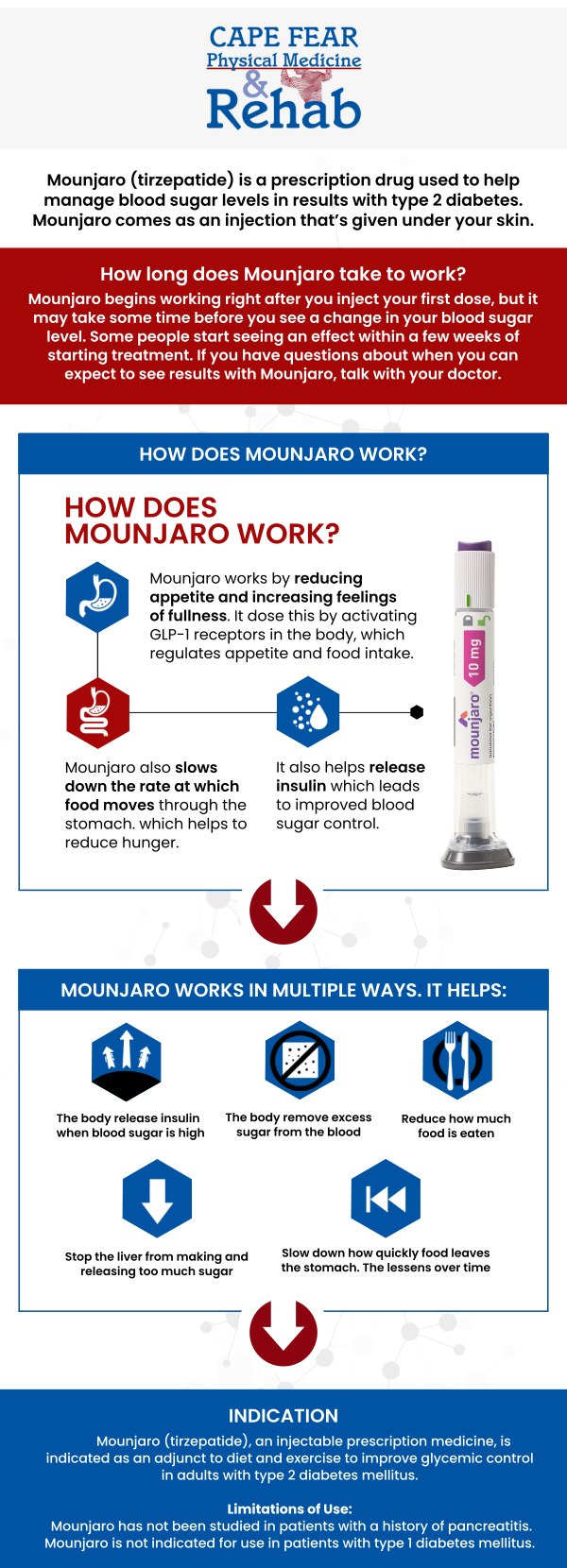
Table of Contents:
Is Mounjaro better than Ozempic for weight loss results?
How do Mounjaro and Ozempic work differently for weight management?
Which medication may help patients lose more weight, Mounjaro or Ozempic?
What should patients consider before choosing Mounjaro or Ozempic?
Compare Mounjaro and Ozempic With Dr. Meisha K. Abbasinejad And Team at Cape Fear Physical Medicine In Fayetteville, NC
At Cape Fear Physical Medicine in Fayetteville, NC, Dr. Meisha K. Abbasinejad and the team explain that both Mounjaro and Ozempic are effective GLP-1–based medications used for weight management, but clinical studies and patient experience often show that Mounjaro may lead to greater average weight loss in many individuals. This difference is largely due to how each medication interacts with appetite and metabolic pathways.
Ozempic (semaglutide) works by mimicking the GLP-1 hormone, which helps reduce appetite, slow gastric emptying, and improve blood sugar control. Mounjaro (tirzepatide), on the other hand, targets both GLP-1 and GIP receptors, creating a dual-action effect that may enhance satiety and improve insulin sensitivity more strongly.
Because of this dual mechanism, some patients experience more significant weight reduction with Mounjaro compared to Ozempic, especially over longer treatment periods of 3 to 6 months and beyond. However, “better” depends on the individual. Factors such as medical history, tolerance, side effects, lifestyle habits, and treatment goals all play an important role in determining which medication is most appropriate.
The team at Cape Fear Physical Medicine emphasizes that both medications require consistent use, dose titration, and lifestyle support for optimal results. Neither medication works instantly, and both are most effective when combined with healthy nutrition and regular physical activity.
Ultimately, while Mounjaro may show stronger average weight loss outcomes in some studies, Ozempic remains a highly effective and widely used option. The best choice depends on individualized medical evaluation and ongoing monitoring by a qualified provider.
At Cape Fear Physical Medicine in Fayetteville, NC, Dr. Meisha K. Abbasinejad and the team explain that while both Mounjaro and Ozempic support weight loss through hormonal regulation, they work through slightly different biological pathways.
Ozempic (semaglutide) is a GLP-1 receptor agonist. It works by increasing feelings of fullness, slowing digestion, and reducing appetite signals in the brain. This helps patients naturally eat fewer calories without extreme dietary restriction.
Mounjaro (tirzepatide) is a dual GIP and GLP-1 receptor agonist. In addition to the GLP-1 effects seen with Ozempic, it also activates the GIP receptor, which may further enhance insulin response, improve fat metabolism, and increase satiety signals. This dual mechanism is believed to contribute to stronger weight loss outcomes in some patients.
Both medications also help stabilize blood sugar levels, reduce cravings, and support improved metabolic health over time. However, Mounjaro’s dual-action approach may lead to more pronounced appetite suppression in certain individuals.
The team emphasizes that despite these differences, both medications require gradual dose escalation, consistent adherence, and lifestyle changes for best results. Patient response varies significantly, and ongoing medical supervision is essential to determine effectiveness and tolerability.
At Cape Fear Physical Medicine in Fayetteville, NC, Dr. Meisha K. Abbasinejad and the team explain that clinical research and real-world results suggest Mounjaro may lead to greater average weight loss compared to Ozempic in many patients. This is primarily due to its dual-action mechanism on both GLP-1 and GIP receptors, which enhances appetite control and metabolic response.
Studies have shown that patients using Mounjaro can achieve higher percentages of body weight reduction over 6 to 12 months compared to those using Ozempic. However, this does not mean Mounjaro is automatically the best option for everyone.
Individual results depend on several factors, including starting weight, insulin sensitivity, diet, physical activity, dosage tolerance, and consistency of use. Some patients respond exceptionally well to Ozempic and achieve meaningful weight loss without needing a medication switch.
The team emphasizes that medication choice should always be personalized. While Mounjaro may statistically show stronger average outcomes, Ozempic remains a highly effective and well-studied treatment with proven long-term benefits.
Ultimately, the goal is not just maximum weight loss but sustainable and healthy weight management tailored to each patient’s needs.
At Cape Fear Physical Medicine in Fayetteville, NC, Dr. Meisha K. Abbasinejad and the team explain that choosing between Mounjaro and Ozempic should be based on a comprehensive medical evaluation rather than weight loss results alone.
Key considerations include medical history, current metabolic health, blood sugar levels, previous medication responses, and tolerance for side effects such as nausea or digestive changes. Patients with type 2 diabetes may also have different treatment goals compared to those using these medications strictly for weight management.
Cost and insurance coverage can also play a significant role, as access to each medication may vary depending on individual plans. Additionally, the gradual dose escalation schedule for both medications requires commitment and consistency over several months.
Lifestyle factors are equally important. Both medications work best when combined with healthy nutrition, portion control, and regular physical activity. Without these changes, results may be limited regardless of which medication is chosen.
The team at Cape Fear Physical Medicine emphasizes that ongoing monitoring is essential to ensure safety, effectiveness, and dose optimization. The best medication is ultimately the one that aligns with the patient’s health profile, goals, and long-term sustainability.
At Cape Fear Physical Medicine in Fayetteville, NC, Board-Certified physician Dr. Meisha K. Abbasinejad, MD, and the team explain that Mounjaro and Ozempic are both highly effective medications for weight management and blood sugar control, but they work through slightly different mechanisms. Ozempic (semaglutide) is a GLP-1 receptor agonist that helps reduce appetite, slow digestion, and improve feelings of fullness, leading to gradual and steady weight loss. Mounjaro (tirzepatide), however, is a dual GIP and GLP-1 receptor agonist, meaning it targets two metabolic pathways, which may enhance appetite suppression and improve insulin sensitivity more strongly in some patients.
Because of this dual action, Mounjaro has shown greater average weight loss results in clinical studies compared to Ozempic for many individuals. However, response varies from patient to patient, and both medications require gradual dose increases, consistent use, and lifestyle support to achieve optimal outcomes. The team at Cape Fear Physical Medicine emphasizes that the best choice depends on individual health history, tolerance, and treatment goals, with close medical supervision ensuring safe and effective weight management tailored to each patient. For more information, contact us or schedule an appointment online. We are conveniently located at 1540 Purdue Dr, Ste. 200, in Fayetteville, NC 28303. We serve patients from Fayetteville NC, Woodfield NC, Hope Mills NC, Fort Bragg NC, Eastover NC, and surrounding areas.

Check Out Our 5 Star Reviews


Additional Services You May Like
▸ Weight Loss & Wellness Program
▸ Botox for Migraine
▸ EMG Nerve Conduction Studies
▸ Epidural Steroid Injections
▸ Radiofrequency Ablation
▸ Rehabilitation Consultations
▸ Facet Injections
▸ Sacroiliac Joint Injections
▸ Joint Injections
▸ Genicular Nerve Blocks
▸ Prosthetic Evaluation/Management
▸ Adjuvant Therapy/Care
▸ Spasticity Management
▸ Stroke Treatment
▸ Multiple Sclerosis
▸ Spinal Cord Injury
▸ Traumatic Brain Injury
▸ Lifestyle Medicine
▸ Phentermine
▸ Qsymia
▸ Contrave
▸ Lipo Injection
▸ B12 Injections

Additional Services You May Like
▸ Weight Loss & Wellness Program
▸ Botox for Migraine
▸ EMG Nerve Conduction Studies
▸ Epidural Steroid Injections
▸ Radiofrequency Ablation
▸ Rehabilitation Consultations
▸ Facet Injections
▸ Sacroiliac Joint Injections
▸ Joint Injections
▸ Genicular Nerve Blocks
▸ Prosthetic Evaluation/Management
▸ Adjuvant Therapy/Care
▸ Spasticity Management
▸ Stroke Treatment
▸ Multiple Sclerosis
▸ Spinal Cord Injury
▸ Traumatic Brain Injury
▸ Lifestyle Medicine
▸ Phentermine
▸ Qsymia
▸ Contrave
▸ Lipo Injection
▸ B12 Injections


 Send Text
 How May I Help You?