
EMG Testing Near Haymount in Fayetteville, NC
EMG testing is a diagnostic service used to assess how well the nerves and muscles are functioning. Cape Fear Physical Medicine and Rehab provides EMG and nerve conduction testing for patients near Haymount experiencing numbness, tingling, unexplained weakness, muscle cramping, or radiating discomfort. Dr. Meisha K. Abbasinejad, MD, carefully evaluates each patient’s symptoms and medical history to determine the appropriate areas for testing. Contact us today for more information, or simply schedule an appointment online! We are conveniently located at 1540 Purdue Dr, Ste. 200, in Fayetteville, NC 28303.
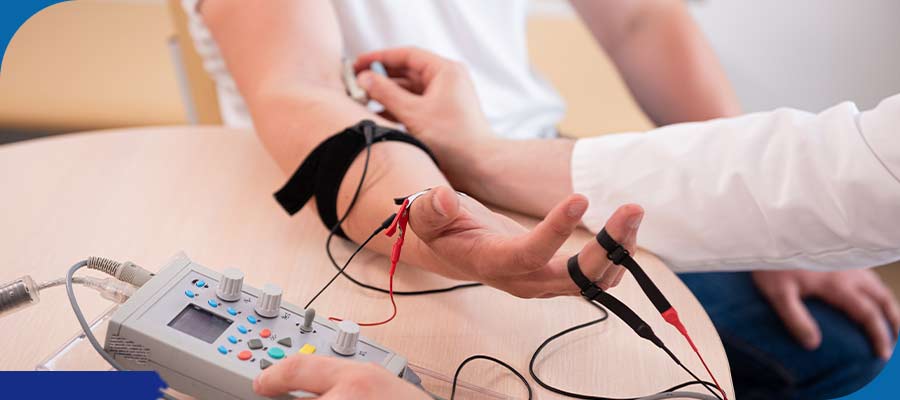
Table of Contents:
What conditions can EMG testing help evaluate?
What symptoms may indicate the need for an EMG test?
Can EMG testing identify the cause of muscle weakness?
What happens after abnormal EMG results are identified?
Why choose Dr. Meisha K. Abbasinejad, MD, for EMG testing near Haymount?
Electromyography examines the electrical activity produced by muscles, while nerve conduction studies measure how effectively electrical signals travel through selected nerves. Together, these tests can help distinguish whether a concern originates within a muscle, a peripheral nerve, a spinal nerve root, or the connection between nerves and muscles.
EMG testing may assist in evaluating:
• Carpal tunnel syndrome and other compressed nerves
• Cervical or lumbar radiculopathy
• Peripheral neuropathy
• Muscle disorders, including certain myopathies
• Disorders involving nerve-to-muscle communication
• Motor neuron conditions
• Brachial plexus or other peripheral nerve abnormalities
The findings may also show where dysfunction is located and whether the pattern is more consistent with a nerve-related or muscle-related disorder. However, EMG results are interpreted alongside symptoms, examination findings, and other diagnostic information.
At Cape Fear Physical Medicine and Rehab, we perform a detailed assessment before selecting the muscles and nerves that need evaluation. This focused process helps gather clinically useful information while avoiding unnecessary testing.
An EMG may be recommended when symptoms suggest that a muscle or the nerve controlling it is not functioning normally. The examination is especially useful when symptoms persist, affect movement or sensation, or cannot be fully explained through a routine physical examination. It may also be ordered when a physician needs to determine whether symptoms arise from a localized nerve problem or a broader neuromuscular condition.
Symptoms that may lead to electrodiagnostic testing include:
• Persistent numbness or tingling
• Unexplained muscle weakness
• Muscle cramping or twitching
• Pain that travels into an arm or leg
• Reduced grip strength
• Difficulty lifting the foot or moving a limb
• Muscle wasting or loss of muscle size
• Changes in reflexes or coordination
These symptoms do not automatically confirm a nerve or muscle disorder. The need for testing depends on their location, duration, pattern, severity, and associated examination findings.
At Cape Fear Physical Medicine and Rehab, Dr. Meisha K. Abbasinejad, MD, reviews each patient’s symptoms, health history, and physical findings before recommending an EMG. Her evaluation helps determine whether electrodiagnostic testing may clarify the source of the concern.
EMG testing can provide valuable information about muscle weakness by showing how muscles respond at rest and during contraction. It may reveal whether weakness is associated with dysfunction in the muscle itself, the nerve supplying the muscle, a spinal nerve root, or communication between the nerve and muscle.
The electrical patterns recorded during the examination may help determine:
• Whether the weakness is nerve-related or muscle-related
• Which muscles or nerve pathways are affected
• Whether abnormalities appear recent or longstanding
• How widespread the dysfunction may be
• Whether additional diagnostic evaluation is necessary
EMG testing does not explain every form of weakness. Some concerns involving the brain, spinal cord, joints, metabolism, or small nerve fibers may require imaging, laboratory work, or other examinations. Results must therefore be considered within the broader clinical picture.
At Cape Fear Physical Medicine and Rehab, Dr. Meisha K. Abbasinejad, MD, uses EMG findings together with the physical examination and medical history to investigate unexplained weakness. This combined evaluation supports a more precise understanding of the affected muscles and nerves.
Abnormal EMG results indicate that the electrical activity of one or more tested muscles or nerves differs from the expected pattern. The findings may point toward nerve compression, peripheral nerve dysfunction, spinal nerve root involvement, muscle disease, or another neuromuscular concern. An abnormal result alone does not always establish a final diagnosis or indicate that the change is permanent.
The next step depends on the location, severity, and pattern of the abnormality. Follow-up may include:
• Comparing the findings with symptoms and examination results
• Reviewing relevant medical conditions and medications
• Ordering imaging or laboratory tests
• Referring the patient to an appropriate specialist
• Developing a personalized management plan
• Monitoring symptoms or repeating testing when clinically appropriate
Some patients may need additional evaluation, while others may have enough information to begin addressing the identified problem.
At Cape Fear Physical Medicine and Rehab, our team explains what the abnormal findings may mean and how they relate to the patient’s symptoms. She then discusses suitable next steps based on the complete evaluation rather than relying on the EMG report alone.
Dr. Meisha K. Abbasinejad, MD, offers focused EMG testing for patients near Haymount who are experiencing numbness, tingling, muscle weakness, radiating discomfort, or other signs of possible nerve or muscle dysfunction. She begins with a careful review of symptoms, medical history, and physical examination findings to determine which nerves and muscles should be evaluated.
At Cape Fear Physical Medicine and Rehab, Dr. Abbasinejad combines electrodiagnostic expertise with personalized care to help clarify the source of abnormal nerve or muscle activity. She explains the testing process, reviews the findings in understandable terms, and discusses appropriate next steps based on the results and each patient’s individual diagnostic needs.
Contact us today for more information, or simply schedule an appointment online! We are conveniently located at 1540 Purdue Dr, Ste. 200, in Fayetteville, NC 28303. We serve patients from Fayetteville NC, Woodfield NC, Hope Mills NC, Fort Bragg NC, Eastover NC, and surrounding areas.

Check Out Our 5 Star Reviews


Additional Services You May Like
▸ Weight Loss & Wellness Program
▸ Botox for Migraine
▸ EMG Nerve Conduction Studies
▸ Epidural Steroid Injections
▸ Radiofrequency Ablation
▸ Rehabilitation Consultations
▸ Facet Injections
▸ Sacroiliac Joint Injections
▸ Joint Injections
▸ Genicular Nerve Blocks
▸ Prosthetic Evaluation/Management
▸ Adjuvant Therapy/Care
▸ Spasticity Management
▸ Stroke Treatment
▸ Multiple Sclerosis
▸ Spinal Cord Injury
▸ Traumatic Brain Injury
▸ Lifestyle Medicine
▸ Phentermine
▸ Qsymia
▸ Contrave
▸ Lipo Injection
▸ B12 Injections

Additional Services You May Like
▸ Weight Loss & Wellness Program
▸ Botox for Migraine
▸ EMG Nerve Conduction Studies
▸ Epidural Steroid Injections
▸ Radiofrequency Ablation
▸ Rehabilitation Consultations
▸ Facet Injections
▸ Sacroiliac Joint Injections
▸ Joint Injections
▸ Genicular Nerve Blocks
▸ Prosthetic Evaluation/Management
▸ Adjuvant Therapy/Care
▸ Spasticity Management
▸ Stroke Treatment
▸ Multiple Sclerosis
▸ Spinal Cord Injury
▸ Traumatic Brain Injury
▸ Lifestyle Medicine
▸ Phentermine
▸ Qsymia
▸ Contrave
▸ Lipo Injection
▸ B12 Injections


 Send Text
 How May I Help You?