
Can High Cholesterol Make It Hard to Lose Weight?
High cholesterol does not usually prevent weight loss directly, but excess weight and unhealthy cholesterol levels can be influenced by some of the same lifestyle, genetic, and medical factors. Board-Certified Dr. Meisha K. Abbasinejad, MD, at Cape Fear Physical Medicine and Rehab reviews cholesterol levels, eating habits, physical activity, medications, medical history, and other weight-related concerns when developing a personalized plan. We help patients pursue realistic weight-management goals while supporting healthier cholesterol levels and overall cardiovascular wellness. Contact us today for more information, or simply schedule an appointment online! We are conveniently located at 1540 Purdue Dr, Ste. 200, in Fayetteville, NC 28303.
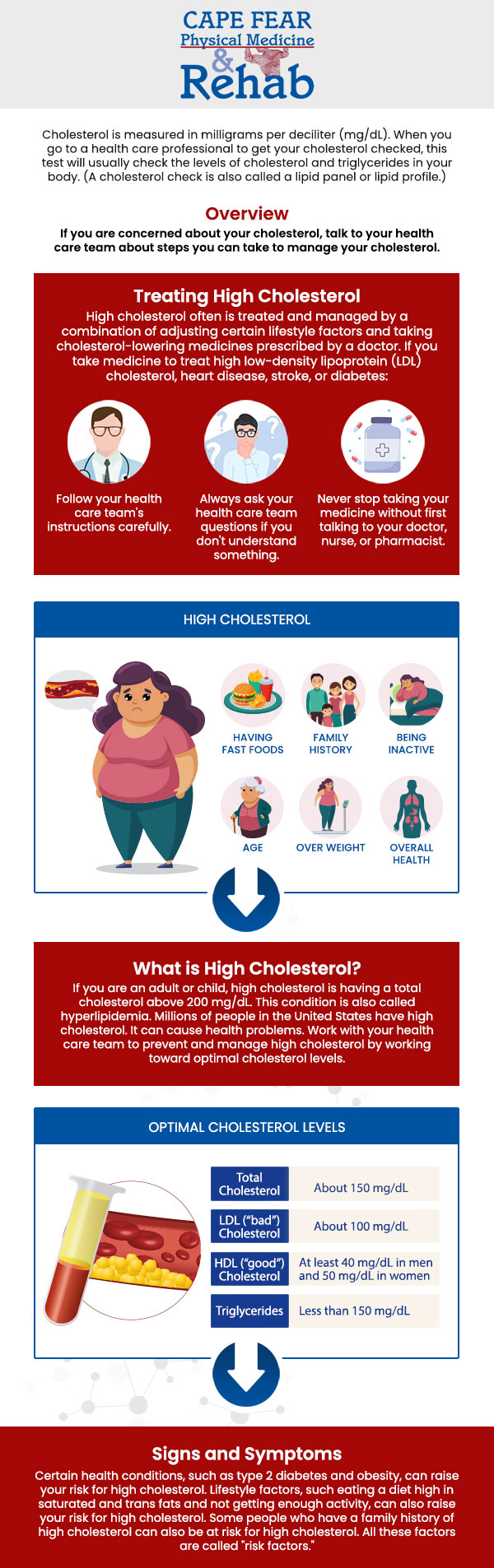
Table of Contents:
How can excess body weight affect LDL, HDL, and triglyceride levels?
What health factors may link high cholesterol with excess weight?
What dietary changes may support both weight loss and healthier cholesterol?
Why can people at a healthy weight still have high cholesterol?
How does Dr. Meisha K. Abbasinejad, MD, personalize weight management for patients with high cholesterol?
Excess body weight may contribute to an unhealthy lipid pattern by raising LDL cholesterol and triglycerides while lowering HDL cholesterol. LDL can contribute to fatty buildup within the arteries, HDL helps transport cholesterol away from the bloodstream, and triglycerides store unused energy from food.
When calorie intake regularly exceeds the body’s energy needs, additional energy may be stored as body fat and triglycerides. Weight loss can improve these measurements over time. NHLBI reports that losing approximately 3% to 5% of current body weight may lower triglycerides, while additional weight loss may reduce LDL and increase HDL.
At Cape Fear Physical Medicine and Rehab, Dr. Meisha K. Abbasinejad, MD, evaluates weight history, cholesterol results, eating habits, activity levels, and overall health concerns. She uses this information to develop a personalized weight-management plan that may support healthier cholesterol and triglyceride levels.
High cholesterol and excess body weight may be connected through several shared health, lifestyle, and genetic factors. These may include:
• High-calorie eating patterns: Regularly consuming more calories than the body uses may contribute to weight gain and elevated triglycerides.
• Saturated fat intake: Fatty meats, full-fat dairy products, fried foods, and some processed foods may raise LDL cholesterol.
• Limited physical activity: Inactivity may make weight management more difficult and contribute to lower HDL cholesterol.
• Abdominal body fat: Carrying excess weight around the waist may be associated with higher triglycerides and lower HDL levels.
• Family history and genetics: Inherited factors can affect how the body processes cholesterol and stores body fat.
• Poor-quality sleep: Inconsistent or inadequate sleep may influence appetite, metabolism, and weight-management efforts.
• Chronic stress: Ongoing stress may affect eating behaviors, physical activity, and other habits related to weight and cholesterol.
• Smoking: Smoking can lower HDL cholesterol and increase cardiovascular health risks.
• Certain medications: Some prescription treatments may affect appetite, body weight, or cholesterol measurements.
• Medical conditions affecting metabolism: Hormonal and metabolic concerns may contribute to both weight changes and unhealthy cholesterol levels.
At Cape Fear Physical Medicine and Rehab, we review these factors rather than evaluating body weight alone. Our assessment may include weight history, lifestyle habits, medications, family history, body measurements, and laboratory results to guide personalized weight-loss recommendations.
A balanced, reduced-calorie eating plan may support gradual weight loss while helping improve cholesterol levels. Helpful dietary changes include:
• Increase soluble fiber: Choose oats, beans, lentils, apples, berries, and other fiber-rich foods that may help lower LDL cholesterol.
• Eat more vegetables and fruits: These foods provide fiber, vitamins, and nutrients while supporting lower-calorie meals.
• Choose whole grains: Replace refined grains with options such as brown rice, oatmeal, quinoa, and whole-grain bread.
• Select lean proteins: Include fish, skinless poultry, beans, lentils, and other lower-fat protein sources.
• Use healthier fats: Choose foods containing unsaturated fats, such as nuts, seeds, avocados, and olive oil.
• Limit saturated fat: Reduce fatty meats, full-fat dairy products, butter, and certain processed foods.
• Reduce fried and heavily processed foods: These foods may contain excess calories, saturated fat, sodium, and added sugars.
• Control portion sizes: Smaller, balanced portions can help reduce calorie intake without eliminating important food groups.
• Limit added sugars: Cutting back on sugary drinks, desserts, and sweetened snacks may support weight and triglyceride management.
At Cape Fear Physical Medicine and Rehab, our team considers each patient’s eating habits, calorie needs, cholesterol results, medical history, and weight goals. We provide realistic dietary recommendations that can be maintained as part of a medically supervised weight-loss plan.
Body weight is only one factor that influences cholesterol. A person at a healthy weight may still have high LDL because of inherited genes, family history, eating habits, limited physical activity, smoking, stress, poor sleep, certain medical conditions, or medications. Therefore, outward appearance cannot reliably indicate whether cholesterol levels are healthy.
Familial hypercholesterolemia is an inherited condition that can cause very high LDL levels beginning at a young age, regardless of body size. Diets high in saturated fat may also raise LDL without causing noticeable weight gain. Because high cholesterol usually has no obvious symptoms, a lipid panel is needed to measure LDL, HDL, and triglycerides accurately.
At Cape Fear Physical Medicine and Rehab, we consider cholesterol results alongside family history, medications, lifestyle habits, weight patterns, and broader health needs. This personalized evaluation helps determine whether lifestyle changes, weight-management support, additional testing, or other medical care may be appropriate.
Board-Certified Dr. Meisha K. Abbasinejad, MD, personalizes weight management by reviewing each patient’s current weight, cholesterol results, eating habits, activity level, medical history, medications, previous weight-loss efforts, and personal goals. She considers how LDL, HDL, and triglyceride levels relate to the patient’s overall health and develops realistic recommendations for calorie intake, portion control, physical activity, and heart-healthy food choices.
At Cape Fear Physical Medicine and Rehab in Fayetteville, NC, Dr. Abbasinejad monitors weight changes, cholesterol levels, treatment tolerance, and progress during follow-up visits. She may adjust nutrition guidance, activity recommendations, or medically appropriate weight-loss treatment based on the patient’s response, helping support sustainable weight management while promoting healthier cholesterol levels.
Contact us today for more information, or simply schedule an appointment online! We are conveniently located at 1540 Purdue Dr, Ste. 200, in Fayetteville, NC 28303. We serve patients from Fayetteville NC, Woodfield NC, Hope Mills NC, Fort Bragg NC, Eastover NC, and surrounding areas.

Check Out Our 5 Star Reviews


Additional Services You May Like
▸ Weight Loss & Wellness Program
▸ Botox for Migraine
▸ EMG Nerve Conduction Studies
▸ Epidural Steroid Injections
▸ Radiofrequency Ablation
▸ Rehabilitation Consultations
▸ Facet Injections
▸ Sacroiliac Joint Injections
▸ Joint Injections
▸ Genicular Nerve Blocks
▸ Prosthetic Evaluation/Management
▸ Adjuvant Therapy/Care
▸ Spasticity Management
▸ Stroke Treatment
▸ Multiple Sclerosis
▸ Spinal Cord Injury
▸ Traumatic Brain Injury
▸ Lifestyle Medicine
▸ Phentermine
▸ Qsymia
▸ Contrave
▸ Lipo Injection
▸ B12 Injections

Additional Services You May Like
▸ Weight Loss & Wellness Program
▸ Botox for Migraine
▸ EMG Nerve Conduction Studies
▸ Epidural Steroid Injections
▸ Radiofrequency Ablation
▸ Rehabilitation Consultations
▸ Facet Injections
▸ Sacroiliac Joint Injections
▸ Joint Injections
▸ Genicular Nerve Blocks
▸ Prosthetic Evaluation/Management
▸ Adjuvant Therapy/Care
▸ Spasticity Management
▸ Stroke Treatment
▸ Multiple Sclerosis
▸ Spinal Cord Injury
▸ Traumatic Brain Injury
▸ Lifestyle Medicine
▸ Phentermine
▸ Qsymia
▸ Contrave
▸ Lipo Injection
▸ B12 Injections


 Send Text
 How May I Help You?