

Wegovy Pill vs Injection for Weight Loss
Wegovy pill vs injection for weight loss. The injection is a once-weekly treatment that provides steady absorption, stronger appetite control, and more consistent weight loss results over time. The oral pill is taken daily but requires strict timing on an empty stomach, which can make it less convenient and less consistent for some patients. At Cape Fear Physical Medicine, Board-Certified physician Dr. Meisha K. Abbasinejad, MD, and the team help patients choose the most suitable option based on individual needs and weight loss goals. For more information, contact us or schedule an appointment online. We are conveniently located at 1540 Purdue Dr, Ste. 200, in Fayetteville, NC 28303.
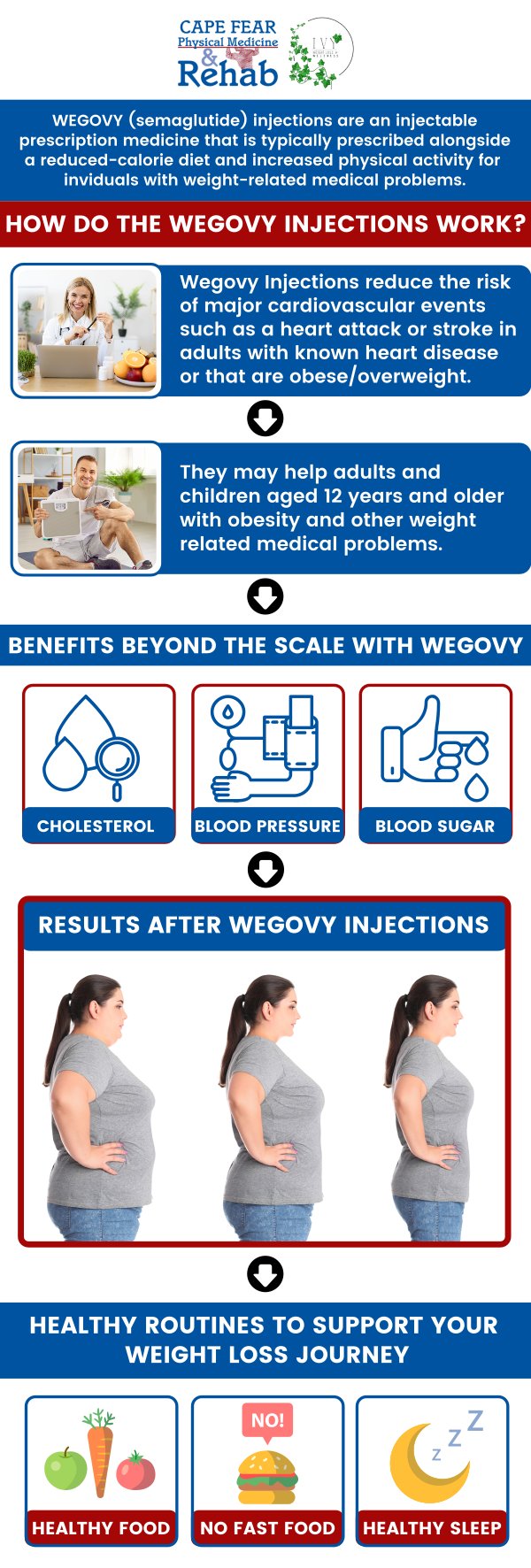
Table of Contents:
What is the difference between a Wegovy pill and a Wegovy injection for weight loss?
How does the Wegovy injection work compared to a weight loss pill?
Which option is more effective for weight loss, the Wegovy pill or the injection?
What should patients know before choosing between the Wegovy pill and injection?
Compare Wegovy Pill vs Injection With Dr. Meisha K. Abbasinejad And Team at Cape Fear Physical Medicine In Fayetteville, NC
At their core, both the Wegovy pill and the Wegovy injection use the same active ingredient, semaglutide, which works by mimicking the GLP-1 hormone. This helps regulate appetite, slow digestion, and reduce cravings, ultimately supporting meaningful weight loss when combined with healthy lifestyle changes. The main difference between the two forms is how they are delivered and how often they are taken.
The injectable form is a once-weekly treatment administered under the skin in the abdomen, thigh, or upper arm. It provides a steady release of medication throughout the week, with no special timing or meal restrictions, making it relatively simple to incorporate into a routine. The oral form, taken daily as a tablet, offers a needle-free option but requires more precise dosing conditions for proper absorption. It must be taken on an empty stomach with a small amount of water, followed by a waiting period before eating, drinking, or taking other medications.
In terms of results, both forms can lead to significant weight loss, though individual response may vary. Clinical studies show strong outcomes with both approaches when used consistently alongside diet and lifestyle support, with similar gastrointestinal side effects such as nausea or mild stomach discomfort. Ultimately, the decision often comes down to personal preference, convenience, and how well a patient can maintain the required dosing routine over time.
The Wegovy injection works by mimicking a natural hormone called GLP-1, which plays a key role in regulating appetite, blood sugar, and digestion. When administered once weekly, it activates receptors in the brain that signal fullness, reduces hunger cravings, and slows stomach emptying. This combination helps patients naturally eat fewer calories without feeling deprived.
In contrast, the oral version works through the same pathway but must pass through the digestive system. Because stomach acid and enzymes break down much of the medication, absorption is significantly lower and more variable. This is why strict dosing instructions are required for oral forms—typically taken first thing in the morning with water and no food for a period afterward.
The injection provides more stable blood levels throughout the week, supporting consistent appetite suppression. Patients often report fewer fluctuations in hunger compared to oral formulations.
Another important difference is bioavailability. Injected therapy avoids the gastrointestinal tract, leading to more predictable and stronger effects. Oral versions must compensate for reduced absorption, but even then, systemic exposure is lower.
When comparing effectiveness, the Wegovy injection is generally considered significantly more effective for weight loss than oral alternatives. This difference comes down to dosing strength, absorption efficiency, and clinical trial data.
The injection was specifically developed and approved for obesity treatment. In clinical studies, patients using it—along with diet and lifestyle changes—experienced substantial average weight loss over time, often in the range of 10–15% or more of total body weight depending on adherence and duration.
The oral version has shown more modest weight loss results. While it can support appetite control and gradual weight reduction, it is not formulated or approved at the same dosing intensity for obesity management. Its absorption limitations mean less active medication reaches the bloodstream, reducing overall impact.
Another factor is consistency. The injection provides once-weekly dosing, which improves adherence and maintains stable levels. The oral version requires daily administration under strict conditions, and even small deviations can reduce effectiveness.
Before choosing between injectable Wegovy and oral options, patients should understand that these are not interchangeable treatments with equal strength or purpose. The injection is specifically designed and approved for chronic weight management, while the oral form is primarily used for blood sugar control and may have limited weight-loss benefit.
One important consideration is treatment consistency. The injection is taken once weekly and provides steady hormone activity, which helps reduce hunger more predictably. The oral form must be taken daily under strict timing conditions, and missed steps can significantly reduce effectiveness.
Patients should also consider lifestyle compatibility. Some individuals prefer avoiding injections and may feel more comfortable with a pill. However, they must also be prepared for strict adherence rules, including fasting requirements before dosing.
Side effects are similar between both forms, since they act on the same biological pathway. These may include nausea, fullness, or digestive changes, especially during early treatment.
Cost, availability, and insurance coverage can also influence the decision.
Dr. Meisha K. Abbasinejad and the team at Cape Fear Physical Medicine, patients seeking medical weight loss are carefully evaluated to determine the most effective option for their individual needs.
When comparing Wegovy injection vs oral alternatives, the injection remains the primary option for weight management due to its higher clinical effectiveness and FDA approval for obesity treatment. It provides steady, once-weekly dosing that helps regulate appetite, reduce cravings, and support sustained weight loss.
The oral version is sometimes chosen by patients who prefer not to use injections. However, it is generally less potent for weight loss due to reduced absorption and strict daily dosing requirements, which can make consistency more difficult.
At Cape Fear Physical Medicine, treatment plans are personalized based on metabolism, health history, lifestyle, and weight loss goals. Some patients benefit more from the reliability of the injection, while others may trial oral therapy depending on clinical suitability.
Dr. Abbasinejad and the team emphasize that successful weight loss depends not only on medication but also on structured nutrition, physical activity, and ongoing medical supervision to ensure sustainable results.
In most cases, the injection is recommended for patients seeking more significant and consistent weight loss outcomes, while oral options are reserved for select situations based on patient needs and provider evaluation. For more information, contact us or schedule an appointment online. We are conveniently located at 1540 Purdue Dr, Ste. 200, in Fayetteville, NC 28303. We serve patients from Fayetteville NC, Woodfield NC, Hope Mills NC, Fort Bragg NC, Eastover NC, and surrounding areas.

Check Out Our 5 Star Reviews


Additional Services You May Like
▸ Weight Loss & Wellness Program
▸ Botox for Migraine
▸ EMG Nerve Conduction Studies
▸ Epidural Steroid Injections
▸ Radiofrequency Ablation
▸ Rehabilitation Consultations
▸ Facet Injections
▸ Sacroiliac Joint Injections
▸ Joint Injections
▸ Genicular Nerve Blocks
▸ Prosthetic Evaluation/Management
▸ Adjuvant Therapy/Care
▸ Spasticity Management
▸ Stroke Treatment
▸ Multiple Sclerosis
▸ Spinal Cord Injury
▸ Traumatic Brain Injury
▸ Lifestyle Medicine
▸ Phentermine
▸ Qsymia
▸ Contrave
▸ Lipo Injection
▸ B12 Injections

Additional Services You May Like
▸ Weight Loss & Wellness Program
▸ Botox for Migraine
▸ EMG Nerve Conduction Studies
▸ Epidural Steroid Injections
▸ Radiofrequency Ablation
▸ Rehabilitation Consultations
▸ Facet Injections
▸ Sacroiliac Joint Injections
▸ Joint Injections
▸ Genicular Nerve Blocks
▸ Prosthetic Evaluation/Management
▸ Adjuvant Therapy/Care
▸ Spasticity Management
▸ Stroke Treatment
▸ Multiple Sclerosis
▸ Spinal Cord Injury
▸ Traumatic Brain Injury
▸ Lifestyle Medicine
▸ Phentermine
▸ Qsymia
▸ Contrave
▸ Lipo Injection
▸ B12 Injections


 Send Text
 How May I Help You?