

What to Expect During an EMG (Electromyography) Test
An EMG (Electromyography) test is a diagnostic procedure used to evaluate the health of your muscles and nerves. At Cape Fear Physical Medicine and Rehab, our healthcare professionals ensure that you are well-prepared for the test and provide support throughout the process. We will guide you on what to expect and help address any questions or concerns you may have. For more information, contact us or schedule an appointment online. We are conveniently located at 1540 Purdue Dr, Ste. 200, Fayetteville, NC 28303.
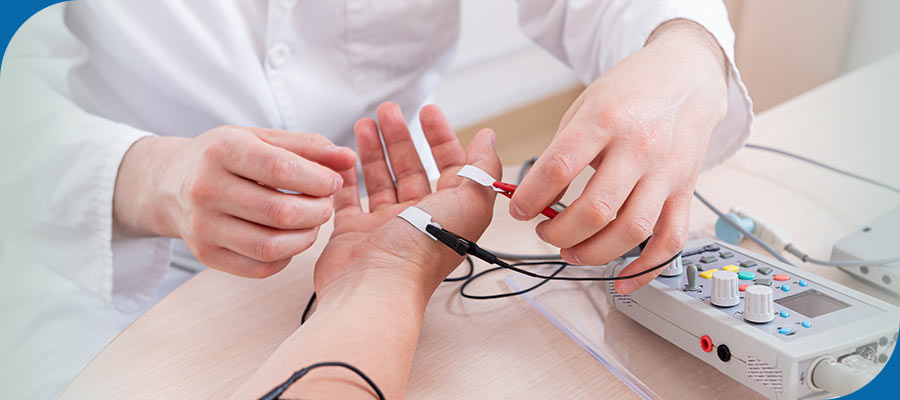
Table of Contents:
Why is an EMG test performed?
How do I prepare for an EMG test?
What should I expect during an EMG test?
What happens when an EMG is positive?
What Can Patients Expect During an EMG Test With Dr. Meisha K. Abbasinejad, MD, in Fayetteville, NC?
At Cape Fear Physical Medicine and Rehab, we prioritize comprehensive diagnostic evaluations to ensure our patients receive precise and effective treatment. One of the crucial diagnostic tools we utilize is Electromyography (EMG). This test plays a significant role in assessing the health of muscles and the nerve cells that control them, known as motor neurons.
An EMG (Electromyography) test is performed to evaluate the electrical activity of muscles, helping to diagnose neuromuscular disorders. It is often recommended for patients who experience symptoms such as muscle weakness, tingling, numbness, muscle pain, cramping, or specific types of limb pain. The test can help identify conditions like muscular dystrophy, carpal tunnel syndrome, peripheral neuropathies, and amyotrophic lateral sclerosis (ALS).
The procedure involves placing a needle electrode into the muscle to measure its electrical activity during rest and contraction. This real-time assessment helps doctors understand whether muscle weakness is caused by an issue with the muscles themselves or the nerves that control them. By detecting any abnormalities in muscle activity, the EMG test plays a crucial role in guiding the treatment plan and ensuring that patients receive the most effective care. It can also be used to monitor the progress of treatment and make adjustments as needed for optimal recovery.
Preparing for an electromyography (EMG) test involves a few simple steps that can help the procedure go smoothly and support accurate results. Before the appointment, tell your physician about all medications and supplements you take, especially blood thinners or medicines that affect muscles. Do not stop any medication unless your physician specifically instructs you to do so. You should also mention any bleeding disorder, implanted electrical device, pacemaker, or other health condition that may affect testing.
On the day of the EMG, shower as usual but avoid applying lotions, creams, or oils to the areas that may be tested because these products can interfere with the electrodes. Wear loose, comfortable clothing that allows easy access to the arms, legs, back, or other muscles being examined. Fasting is generally not required, so patients can usually eat and drink normally unless they receive different instructions from their physician.
Arriving a little early can provide time to complete paperwork and discuss any remaining concerns. An EMG may include nerve conduction studies using brief electrical impulses and a needle examination that records activity within selected muscles. These steps may cause temporary tingling or mild discomfort, but the sensations usually pass quickly. Understanding the process and asking questions beforehand can help patients feel more comfortable and prepared.
During an EMG (Electromyography) test, you can expect a thorough and comfortable experience. The healthcare provider will first discuss your medical history and any symptoms you’ve been experiencing, helping to tailor the procedure to your specific needs.
The test is conducted in a calm, quiet environment to help you stay relaxed. You will be asked to wear a gown for easy access to the muscles being tested. Small, thin needles, called electrodes, will be gently inserted into the muscles to measure electrical activity. While the insertion of the needles might cause some minor discomfort, it is typically well-tolerated.
Throughout the test, you may be asked to contract certain muscles by moving a limb or holding specific positions. This helps evaluate muscle activity both at rest and during movement. The electrical signals detected are displayed on a monitor, and the patterns are analyzed to provide important diagnostic information.
The procedure typically lasts between 30 to 60 minutes, depending on the number of muscles being tested. Afterward, the electrodes will be removed, and the insertion sites cleaned. Any temporary bruising or soreness is generally minimal and resolves quickly.
A positive EMG (Electromyography) result typically indicates that some dysfunction or damage is affecting the muscles or nerves. It can point to conditions like peripheral neuropathy, myopathy, radiculopathy, or neuromuscular disorders, such as myasthenia gravis. For instance, detecting spontaneous electrical activity in a resting muscle during the test could suggest muscle damage or nerve injury. Abnormalities observed during muscle contractions may indicate issues with nerve transmission or muscle structure.
When an EMG result is positive, healthcare providers carefully analyze the patterns of electrical activity to help identify the underlying issue. Specific findings, such as fibrillation potentials or positive sharp waves, may indicate nerve damage, while myopathic changes could suggest a muscle-related condition. These findings provide important clues for further diagnostic testing, treatment planning, and managing any potential underlying health issues.
After a positive EMG result, a comprehensive clinical evaluation is typically conducted, which may include additional tests like nerve conduction studies, imaging, or blood tests. This holistic approach helps ensure a thorough understanding of the diagnosis and assists in creating a personalized treatment plan tailored to the patient’s needs. Discussing EMG results with your healthcare provider is essential to fully understand the implications of the findings and how they relate to your overall health.
During an EMG test, board-certified physician Dr. Meisha K. Abbasinejad, MD, begins by reviewing the patient’s symptoms, medical history, and areas of numbness, tingling, weakness, cramping, or pain. The evaluation may include nerve conduction studies, which use brief electrical impulses to measure how well nerves transmit signals, followed by a needle EMG that records electrical activity in selected muscles. Dr. Abbasinejad explains each step and helps patients understand the temporary sensations they may experience during testing.
At Cape Fear Physical Medicine and Rehab in Fayetteville, NC, Dr. Abbasinejad uses EMG findings to evaluate possible nerve or muscle abnormalities and better understand the source of a patient’s symptoms. After the test, she reviews the available findings, answers questions, and discusses whether additional evaluation or treatment may be appropriate. We focus on providing clear information and personalized medical guidance so patients can make informed decisions about their next steps.
At Cape Fear Physical Medicine and Rehab, we are committed to providing expert guidance and compassionate care to support our patients on their journey to recovery. Contact us or schedule an appointment to learn more about how we can assist you in achieving your health and wellness goals. We are conveniently located at 1540 Purdue Dr, Ste. 200, Fayetteville, NC 28303. We serve patients from Fayetteville NC, Woodfield NC, Hope Mills NC, Fort Bragg NC, Eastover NC, and surrounding areas.

Check Out Our 5 Star Reviews


Additional Services You May Like
▸ Weight Loss & Wellness Program
▸ Botox for Migraine
▸ EMG Nerve Conduction Studies
▸ Epidural Steroid Injections
▸ Radiofrequency Ablation
▸ Rehabilitation Consultations
▸ Facet Injections
▸ Sacroiliac Joint Injections
▸ Joint Injections
▸ Genicular Nerve Blocks
▸ Prosthetic Evaluation/Management
▸ Adjuvant Therapy/Care
▸ Spasticity Management
▸ Stroke Treatment
▸ Multiple Sclerosis
▸ Spinal Cord Injury
▸ Traumatic Brain Injury
▸ Lifestyle Medicine
▸ Phentermine
▸ Qsymia
▸ Contrave
▸ Lipo Injection
▸ B12 Injections

Additional Services You May Like
▸ Weight Loss & Wellness Program
▸ Botox for Migraine
▸ EMG Nerve Conduction Studies
▸ Epidural Steroid Injections
▸ Radiofrequency Ablation
▸ Rehabilitation Consultations
▸ Facet Injections
▸ Sacroiliac Joint Injections
▸ Joint Injections
▸ Genicular Nerve Blocks
▸ Prosthetic Evaluation/Management
▸ Adjuvant Therapy/Care
▸ Spasticity Management
▸ Stroke Treatment
▸ Multiple Sclerosis
▸ Spinal Cord Injury
▸ Traumatic Brain Injury
▸ Lifestyle Medicine
▸ Phentermine
▸ Qsymia
▸ Contrave
▸ Lipo Injection
▸ B12 Injections


 Send Text
 How May I Help You?