
Can Contrave Help Reduce Appetite and Food Cravings?
Contrave may help reduce appetite and make food cravings easier to manage by influencing brain pathways involved in hunger and food-related reward. Because every patient responds differently, Dr. Meisha K. Abbasinejad, MD, considers eating patterns, previous weight-loss efforts, medical history, current medications, and overall wellness goals before recommending treatment. At Cape Fear Physical Medicine and Rehab in Fayetteville, Contrave may be incorporated into a personalized medical weight-management plan that also encourages balanced nutrition and healthier daily habits. Contact us today for more information, or simply schedule an appointment online! We are conveniently located at 1540 Purdue Dr, Ste. 200, in Fayetteville, NC 28303.
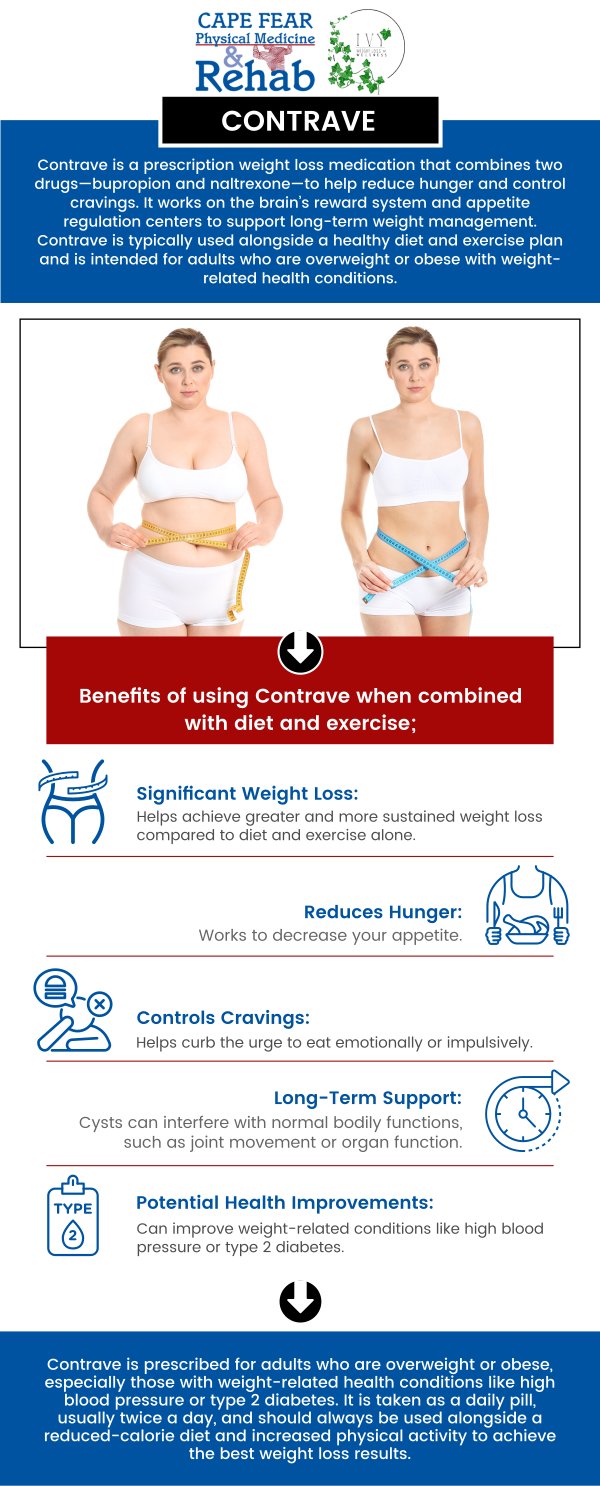
Table of Contents:
How does Contrave help reduce appetite and food cravings?
What health factors are reviewed before Contrave is recommended?
How long may it take to notice changes in appetite or cravings?
What lifestyle changes may improve results during Contrave treatment?
How does Dr. Meisha K. Abbasinejad, MD, determine whether Contrave is appropriate for a patient?
Contrave combines two medications, naltrexone and bupropion, that act on areas of the brain involved in appetite and food-related reward. Bupropion may help reduce hunger signals, while naltrexone may support its effects and help decrease the rewarding response associated with certain foods. The exact neurochemical process responsible for weight loss is not fully understood.
By influencing both hunger and craving pathways, Contrave may help some patients feel satisfied with smaller portions and experience fewer urges to eat when they are not physically hungry. It is intended to be used alongside a reduced-calorie eating plan and increased physical activity rather than as a stand-alone treatment. Individual responses can vary.
At Cape Fear Physical Medicine and Rehab, our skilled team evaluates each patient’s health history, eating patterns, medications, and weight-management goals before recommending Contrave. Regular follow-up allows her to monitor changes in appetite, cravings, weight, and possible side effects.
Before Contrave is recommended, a detailed health evaluation is completed to determine whether the medication may be safe and appropriate. The physician reviews the patient’s medical history, current medications, weight-related concerns, and lifestyle factors. This assessment helps identify potential risks and supports a personalized treatment decision.
• Current weight and body mass index: These measurements help determine whether the patient may meet the general criteria for medical weight-management treatment.
• Weight-related health concerns: Conditions associated with excess weight are considered when evaluating treatment options.
• Previous weight-loss efforts: The physician may review earlier nutrition, exercise, medication, and lifestyle programs and their results.
• Blood pressure: Contrave may not be appropriate for patients with uncontrolled high blood pressure.
• Seizure history: A personal history of seizures can affect whether Contrave is considered suitable.
• Eating disorder history: Conditions such as anorexia or bulimia are important to discuss before treatment.
• Current opioid use: Contrave contains naltrexone and is generally not recommended for individuals currently using opioid medications.
• Current medications: Prescription drugs, over-the-counter products, and supplements are reviewed for possible interactions.
• Mental health history: Depression, anxiety, mood changes, and other behavioral health concerns may be evaluated.
• Liver and kidney health: These organs affect how medications are processed and may influence treatment recommendations.
• Blood sugar concerns: Diabetes, the risk of low blood sugar, and related medications may be considered.
• Pregnancy status: Contrave is not recommended for weight loss during pregnancy.
• Lifestyle habits and goals: Eating patterns, physical activity, sleep, stress, and long-term weight goals help guide the treatment plan.
At Cape Fear Physical Medicine and Rehab, we review these health factors carefully to determine whether Contrave may be an appropriate part of a personalized weight-management plan. She also discusses potential benefits, possible side effects, dosing instructions, and the follow-up needed to monitor each patient’s response.
Some patients may notice changes in appetite, hunger, or food cravings during the first few weeks of Contrave treatment. However, the timeframe varies because the dose is gradually increased over four weeks, allowing the body to adjust to the medication. Changes may be subtle at first and become more noticeable as the patient reaches the prescribed maintenance dose.
Other factors, including eating habits, stress, sleep, physical activity, medical conditions, and consistency with treatment, may affect how quickly a patient notices results. Contrave should be used with a reduced-calorie eating plan and regular physical activity, and patients should take it exactly as directed. Appetite changes alone do not determine whether the medication is working, so progress may also be assessed through weight changes and improvements in daily eating patterns.
At Cape Fear Physical Medicine and Rehab, Dr. Meisha K. Abbasinejad, MD, monitors each patient’s response, side effects, and weight-management progress during follow-up visits. The prescribing information recommends formally evaluating treatment response after 12 weeks at the maintenance dose, helping us determine whether Contrave remains an appropriate part of the patient’s personalized plan.
Lifestyle changes can help patients make the most of Contrave treatment by supporting healthier eating patterns, regular activity, and long-term weight-management habits. Because individual needs and medical considerations vary, these changes should be introduced gradually and followed according to the physician’s recommendations.
• Follow a reduced-calorie eating plan: Choose balanced meals that include vegetables, fruits, lean proteins, whole grains, and other nutrient-rich foods.
• Practice portion control: Paying attention to serving sizes and eating slowly may help patients recognize fullness and reduce excess calorie intake.
• Increase physical activity gradually: Regular walking, strength training, or other appropriate activities can support calorie use, overall health, and long-term weight maintenance.
• Track meals and cravings: Recording eating habits, hunger, activity levels, and food cravings can help identify patterns that may need adjustment.
• Avoid taking Contrave with high-fat meals: High-fat meals may affect how the medication is absorbed, so patients should follow their physician’s dosing and meal instructions.
• Maintain consistent sleep habits: Adequate sleep may support appetite regulation, energy levels, and the ability to follow healthy routines.
• Manage stress in healthy ways: Relaxation techniques, mindfulness, and other stress-management strategies may help reduce stress-related eating.
• Attend regular follow-up visits: Ongoing evaluations allow the physician to review progress, monitor side effects, and adjust the treatment plan when needed.
At Cape Fear Physical Medicine and Rehab, patients receive personalized guidance designed to complement Contrave treatment. Regular follow-up with Board-Certified Dr. Meisha K. Abbasinejad, MD, helps ensure that nutrition, activity, and lifestyle recommendations remain appropriate for each patient’s health needs and weight-management goals.
Board-Certified Dr. Meisha K. Abbasinejad, MD, determines whether Contrave is appropriate by completing a personalized medical evaluation. She reviews the patient’s current weight, body mass index, weight-related health concerns, previous weight-loss efforts, eating patterns, lifestyle habits, medical history, and treatment goals. Dr. Abbasinejad also evaluates current medications and considers whether Contrave could safely complement a reduced-calorie diet and increased physical activity.
Dr. Abbasinejad carefully checks for factors that may make Contrave unsuitable, including uncontrolled high blood pressure, a seizure disorder, certain eating disorders, current opioid use, or the use of other medications containing bupropion. She discusses the medication’s potential benefits, risks, possible side effects, and required follow-up before creating an individualized weight-management plan. At Cape Fear Physical Medicine and Rehab in Fayetteville, NC, continued monitoring helps Dr. Abbasinejad evaluate the patient’s response and determine whether Contrave remains appropriate.
Contact us today for more information, or simply schedule an appointment online! We are conveniently located at 1540 Purdue Dr, Ste. 200, in Fayetteville, NC 28303. We serve patients from Fayetteville NC, Woodfield NC, Hope Mills NC, Fort Bragg NC, Eastover NC, and surrounding areas.

Check Out Our 5 Star Reviews


Additional Services You May Like
▸ Weight Loss & Wellness Program
▸ Botox for Migraine
▸ EMG Nerve Conduction Studies
▸ Epidural Steroid Injections
▸ Radiofrequency Ablation
▸ Rehabilitation Consultations
▸ Facet Injections
▸ Sacroiliac Joint Injections
▸ Joint Injections
▸ Genicular Nerve Blocks
▸ Prosthetic Evaluation/Management
▸ Adjuvant Therapy/Care
▸ Spasticity Management
▸ Stroke Treatment
▸ Multiple Sclerosis
▸ Spinal Cord Injury
▸ Traumatic Brain Injury
▸ Lifestyle Medicine
▸ Phentermine
▸ Qsymia
▸ Contrave
▸ Lipo Injection
▸ B12 Injections

Additional Services You May Like
▸ Weight Loss & Wellness Program
▸ Botox for Migraine
▸ EMG Nerve Conduction Studies
▸ Epidural Steroid Injections
▸ Radiofrequency Ablation
▸ Rehabilitation Consultations
▸ Facet Injections
▸ Sacroiliac Joint Injections
▸ Joint Injections
▸ Genicular Nerve Blocks
▸ Prosthetic Evaluation/Management
▸ Adjuvant Therapy/Care
▸ Spasticity Management
▸ Stroke Treatment
▸ Multiple Sclerosis
▸ Spinal Cord Injury
▸ Traumatic Brain Injury
▸ Lifestyle Medicine
▸ Phentermine
▸ Qsymia
▸ Contrave
▸ Lipo Injection
▸ B12 Injections


 Send Text
 How May I Help You?