
EMG Testing Specialist in Fayetteville, NC
Electromyography (EMG) is a valuable tool for evaluating the electrical activity in muscles and nerves, helping our team gain a deeper understanding of your condition. By using advanced EMG technology, we provide accurate results that guide us in creating a personalized treatment plan designed to support your overall well-being and recovery. At Cape Fear Physical Medicine and Rehab, our professional team specializes in EMG testing, a diagnostic procedure that assesses nerve and muscle function. Contact us today for more information or book an appointment. We are conveniently located at 1540 Purdue Dr, Ste. 200 Fayetteville, NC 28303.
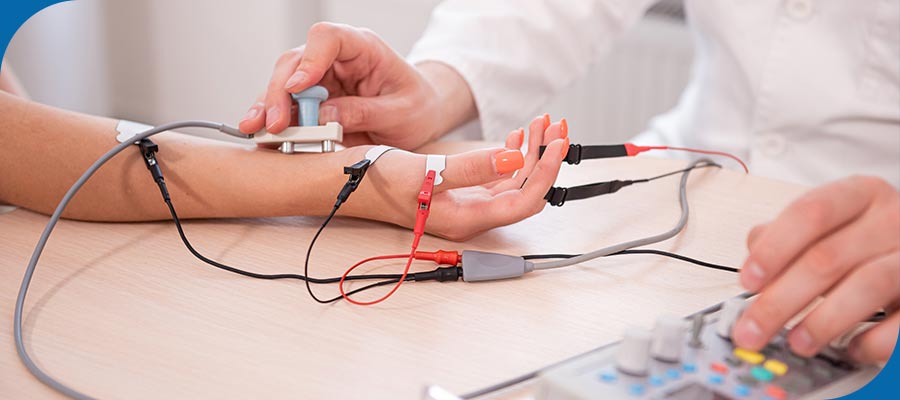
Table of Contents:
What is EMG Testing?
What is an EMG test used to diagnose?
How long does an EMG test take?
What happens during EMG Testing?
Trusted EMG testing specialist: Dr. Meisha K. Abbasinejad, MD, in Fayetteville, NC
EMG testing, or electromyography, is a diagnostic procedure that evaluates the electrical activity of muscles and the nerves that control them. It is commonly performed with a nerve conduction study to investigate symptoms such as numbness, tingling, muscle weakness, cramping, fatigue, or unexplained nerve-related pain. EMG testing may help identify peripheral neuropathy, nerve compression, herniated discs, muscle disorders, nerve-and-muscle communication conditions, and certain motor neuron disorders. During the procedure, skin electrodes measure how electrical signals travel through the nerves, while a thin sterile needle electrode records muscle activity at rest and during contraction. Testing usually takes about 30 to 60 minutes, depending on the number of nerves and muscles evaluated. At Cape Fear Physical Medicine & Rehab in Fayetteville, NC, board-certified Dr. Meisha K. Abbasinejad, MD, personalizes each EMG test according to the patient’s symptoms, medical history, and physical examination findings.
EMG testing, or electromyography, is a diagnostic procedure that evaluates the electrical activity of muscles and the nerves controlling them. It can show how muscles respond while resting and contracting, helping determine whether symptoms may be related to a muscle disorder, nerve problem, or communication issue between the nerves and muscles.
During the test, a thin sterile needle electrode is inserted into selected muscles to record their electrical activity. EMG testing is often performed with a nerve conduction study, which uses electrodes placed on the skin to measure the strength and speed of electrical signals traveling through specific nerves.
At Cape Fear Physical Medicine and Rehab, Dr. Meisha K. Abbasinejad, MD, uses EMG testing to investigate symptoms such as numbness, tingling, muscle weakness, cramping, or unexplained pain. She reviews the results alongside the patient’s history and examination findings to identify the possible source of symptoms and guide appropriate care.
The primary goal of an EMG test is to assess the health of your muscles and their motor neurons. It may be done if you experience symptoms such as muscle weakness, fatigue, cramping, numbness, and/or tingling. This advanced diagnostic tool can diagnose the following conditions:
• Muscle disorders such as peripheral neuropathy, polymyositis, and muscular dystrophy
• Herniated disks
• Nerve and muscle connection disorders such as myasthenia gravis
• Motor neuron disorders in the brain and spinal cord such as amyotrophic lateral sclerosis, spinal muscular atrophy, progressive bulbar palsy, or post-polio syndrome
An EMG test usually takes about 30 to 60 minutes, although the time can vary depending on the symptoms and the number of areas being examined. Some appointments may be shorter, while studies involving several nerves and muscles may take longer. The test may include both nerve conduction testing and a needle EMG.
During nerve conduction testing, electrodes are placed on the skin to measure how quickly electrical signals travel through the nerves. During the needle EMG portion, a thin electrode is inserted into muscles to record electrical activity at rest and during movement. The physician chooses the testing areas based on the patient’s symptoms and examination findings.
At Cape Fear Physical Medicine and Rehab, Dr. Meisha K. Abbasinejad, MD, personalizes each EMG test according to the patient’s numbness, tingling, weakness, or pain. We can provide a time estimate before testing after determining which nerves and muscles require evaluation.
During EMG testing, the patient sits or lies comfortably while the physician cleans the skin over the muscles being evaluated. A thin, sterile needle electrode is carefully inserted into selected muscles to record their electrical activity. Mild, brief discomfort may be felt when the electrode is placed.
The patient is asked to relax the muscle and then contract it gently while the equipment records electrical signals. The electrode may be repositioned to examine additional muscles. EMG testing is often performed with a nerve conduction study, which uses skin electrodes and brief electrical impulses to measure how quickly and effectively signals travel through the nerves.
At Cape Fear Physical Medicine and Rehab, Dr. Meisha K. Abbasinejad, MD, selects the nerves and muscles evaluated according to each patient’s symptoms, medical history, and physical examination findings. She reviews the recorded electrical activity to help identify possible nerve or muscle abnormalities and guide appropriate next steps for care.
Board-certified Dr. Meisha K. Abbasinejad, MD, provides individualized EMG testing for patients experiencing numbness, tingling, muscle weakness, cramping, or unexplained nerve-related pain. She reviews each patient’s symptoms, medical history, and physical examination findings to determine which nerves and muscles should be evaluated.
At Cape Fear Physical Medicine and Rehab, board-certified Dr. Meisha K. Abbasinejad, MD, guides patients through every stage of EMG testing and explains what to expect during the procedure. She interprets the electrical findings alongside the clinical evaluation to help identify possible nerve, muscle, or nerve-root concerns and develop informed recommendations for personalized care. Contact us today or schedule an appointment to learn more about our EMG testing services and how we can help you achieve your wellness goals. We are conveniently located at 1540 Purdue Dr, Ste. 200 Fayetteville, NC 28303. We serve patients from Fayetteville NC, Woodfield NC, Hope Mills NC, Fort Bragg NC, Eastover NC, and surrounding areas.

Check Out Our 5 Star Reviews


Additional Services You May Like
▸ Weight Loss & Wellness Program
▸ Botox for Migraine
▸ EMG Nerve Conduction Studies
▸ Epidural Steroid Injections
▸ Radiofrequency Ablation
▸ Rehabilitation Consultations
▸ Facet Injections
▸ Sacroiliac Joint Injections
▸ Joint Injections
▸ Genicular Nerve Blocks
▸ Prosthetic Evaluation/Management
▸ Adjuvant Therapy/Care
▸ Spasticity Management
▸ Stroke Treatment
▸ Multiple Sclerosis
▸ Spinal Cord Injury
▸ Traumatic Brain Injury
▸ Lifestyle Medicine
▸ Phentermine
▸ Qsymia
▸ Contrave
▸ Lipo Injection
▸ B12 Injections

Additional Services You May Like
▸ Weight Loss & Wellness Program
▸ Botox for Migraine
▸ EMG Nerve Conduction Studies
▸ Epidural Steroid Injections
▸ Radiofrequency Ablation
▸ Rehabilitation Consultations
▸ Facet Injections
▸ Sacroiliac Joint Injections
▸ Joint Injections
▸ Genicular Nerve Blocks
▸ Prosthetic Evaluation/Management
▸ Adjuvant Therapy/Care
▸ Spasticity Management
▸ Stroke Treatment
▸ Multiple Sclerosis
▸ Spinal Cord Injury
▸ Traumatic Brain Injury
▸ Lifestyle Medicine
▸ Phentermine
▸ Qsymia
▸ Contrave
▸ Lipo Injection
▸ B12 Injections


 Send Text
 How May I Help You?