
Traumatic Brain Injury Treatment in Fayetteville, NC
At Cape Fear Physical Medicine & Rehab, we specialize in treating traumatic brain injuries (TBI) with a comprehensive approach designed to help patients recover and regain their quality of life. Traumatic brain injuries can have a significant impact on physical, cognitive, and emotional well-being, but with the right treatment and support, recovery is possible. Our professional team works closely with each patient to develop a personalized treatment plan that addresses their unique needs. Our goal is to support you every step of the way, helping you get back to your daily activities and routines with confidence and greater independence. Contact us for more information or schedule an appointment online. We are conveniently located at 1540 Purdue Dr, Ste. 200 Fayetteville, NC 28303.
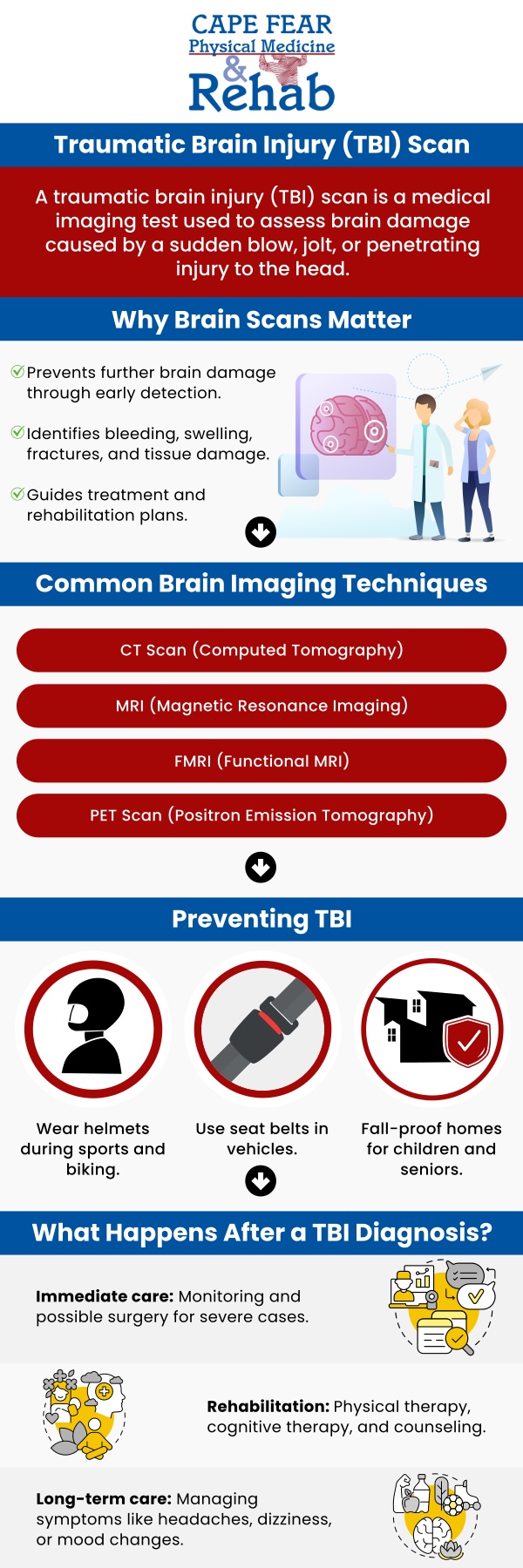
Table of Contents:
What is a traumatic brain injury (TBI)?
Who might get a traumatic brain injury (TBI)?
How common are traumatic brain injuries (TBIs)?
How is a traumatic brain injury (TBI) managed or treated?
Why Choose Dr. Meisha K. Abbasinejad, MD, at Cape Fear Physical Medicine and Rehab for Traumatic Brain Injury Treatment in Fayetteville, NC?
A traumatic brain injury (TBI) is an injury that disrupts normal brain function. It may occur after a forceful bump, blow, or jolt to the head or body, or when an object penetrates the skull and damages brain tissue. Not every head impact causes a TBI, but any injury that changes how a person thinks, feels, moves, communicates, or behaves requires appropriate attention.
TBIs are generally classified as mild, moderate, or severe. A concussion is considered a mild TBI, although its symptoms can still interfere with daily life. Depending on the injury, a person may experience headaches, dizziness, confusion, memory problems, difficulty concentrating, balance changes, fatigue, sleep disruption, mood changes, or loss of consciousness. Symptoms may appear immediately or develop gradually after the incident.
Cape Fear Physical Medicine and Rehab can evaluate persistent physical and functional concerns following a traumatic brain injury. Based on the patient’s symptoms, medical history, and daily limitations, an individualized plan may include rehabilitation, symptom management, activity guidance, coordinated follow-up, or referral for additional neurological or emergency evaluation when appropriate.
A traumatic brain injury can affect anyone after a forceful impact, sudden jolt, or blow to the head. However, some people may face a greater risk because of their age, occupation, activities, medical history, or exposure to situations where falls and head impacts are more likely.
• Older adults, especially those who have balance problems or an increased risk of falling
• Infants and young children, who may fall from beds, stairs, furniture, or playground equipment
• Teenagers and young adults, particularly those involved in sports, driving, or high-impact activities
• Athletes in contact sports, including football, soccer, hockey, basketball, and wrestling
• Drivers, passengers, cyclists, motorcyclists, and pedestrians involved in collisions
• Military personnel and veterans exposed to blasts, falls, or forceful impacts
• Construction workers and others in physically demanding jobs involving heights, machinery, or falling objects
• People who experience assault or interpersonal violence involving a strike to the head
• Individuals with a previous concussion or TBI, who may be more vulnerable to complications from another head impact
• People participating in recreational activities without proper protective equipment, such as helmets or safety gear
Anyone who develops headaches, dizziness, confusion, memory changes, balance problems, unusual fatigue, or difficulty concentrating after a head impact should seek medical attention. Cape Fear Physical Medicine and Rehab evaluates persistent physical and functional concerns related to TBI and helps determine whether rehabilitation, further testing, specialist referral, or coordinated follow-up may be appropriate.
Traumatic brain injuries are common and affect people of all ages. They range from mild concussions to moderate or severe injuries that may cause lasting physical, cognitive, emotional, or behavioral changes. Falls are a leading cause of TBI-related hospitalizations, while motor vehicle crashes, assaults, sports-related impacts, and other blows to the head may also result in brain injury.
Many people with a TBI are treated in emergency departments, urgent care centers, or primary care offices, while others may not seek medical evaluation. Because symptoms and severity can vary considerably, the actual number of traumatic brain injuries may be higher than reported figures suggest. Older adults, young children, athletes, military personnel, and individuals involved in high-impact incidents may face an increased risk.
Because even a mild TBI can cause headaches, dizziness, confusion, memory difficulties, sleep changes, or reduced concentration, symptoms following a head impact should not be ignored. Cape Fear Physical Medicine and Rehab can evaluate ongoing physical and functional concerns after a TBI and determine whether rehabilitation, additional testing, specialist referral, or coordinated follow-up may be appropriate.
Traumatic brain injury treatment depends on the severity of the injury, the symptoms present, and how the condition affects daily functioning. Mild TBI or concussion is often managed with an initial period of relative physical and cognitive rest, symptom monitoring, and a gradual return to work, school, exercise, and other activities under medical guidance. Patients should receive prompt reassessment if symptoms worsen, new concerns develop, or recovery takes longer than expected.
Moderate or severe TBI typically requires emergency and hospital-based care to stabilize the patient and address complications such as bleeding, swelling, seizures, or changes in consciousness. After the person is medically stable, rehabilitation may include physical therapy, occupational therapy, speech-language therapy, cognitive rehabilitation, psychological support, and assistance with balance, mobility, memory, concentration, or communication. Treatment is individualized and may involve multiple specialists over a short or extended period.
At Cape Fear Physical Medicine and Rehab, patients can receive a detailed evaluation of persistent physical and functional concerns following a TBI. An individualized plan may address headaches, dizziness, reduced endurance, balance difficulties, discomfort, and challenges returning to normal activities. When additional neurological testing, emergency care, cognitive therapy, or specialized rehabilitation is necessary, appropriate referrals and coordinated follow-up can help support a safer and more comprehensive recovery process.
Dr. Meisha K. Abbasinejad, MD, offers a rehabilitation-focused perspective for individuals seeking traumatic brain injury treatment in Fayetteville, NC. As a founding member of Cape Fear Physical Medicine and Rehab, Dr. Abbasinejad has experience evaluating conditions that may affect the nervous system, mobility, physical comfort, and daily functioning. Her clinical interests in musculoskeletal medicine and electrodiagnostics further support a detailed assessment of symptoms that may accompany or complicate recovery.
Dr. Abbasinejad can develop an individualized care plan based on the severity of the brain injury, ongoing symptoms, functional limitations, medical history, and recovery goals. Treatment may focus on concerns such as headaches, dizziness, balance difficulties, reduced stamina, sleep disruption, or challenges returning to normal activities. Because rehabilitation after a traumatic brain injury may require several types of care, she can also help coordinate appropriate therapies or specialist referrals when necessary. Her goal is to support safer recovery, improve function, and help patients regain greater independence and quality of life. Contact us or schedule an appointment and let our team help you begin your path to recovery and improved quality of life. We are conveniently located at 1540 Purdue Dr, Ste. 200 Fayetteville, NC 28303. We serve patients from Fayetteville NC, Woodfield NC, Hope Mills NC, Fort Bragg NC, Eastover NC, and surrounding areas.

Check Out Our 5 Star Reviews


Additional Services You May Like
▸ Weight Loss & Wellness Program
▸ Botox for Migraine
▸ EMG Nerve Conduction Studies
▸ Epidural Steroid Injections
▸ Radiofrequency Ablation
▸ Rehabilitation Consultations
▸ Facet Injections
▸ Sacroiliac Joint Injections
▸ Joint Injections
▸ Genicular Nerve Blocks
▸ Prosthetic Evaluation/Management
▸ Adjuvant Therapy/Care
▸ Spasticity Management
▸ Stroke Treatment
▸ Multiple Sclerosis
▸ Spinal Cord Injury
▸ Traumatic Brain Injury
▸ Lifestyle Medicine
▸ Phentermine
▸ Qsymia
▸ Contrave
▸ Lipo Injection
▸ B12 Injections

Additional Services You May Like
▸ Weight Loss & Wellness Program
▸ Botox for Migraine
▸ EMG Nerve Conduction Studies
▸ Epidural Steroid Injections
▸ Radiofrequency Ablation
▸ Rehabilitation Consultations
▸ Facet Injections
▸ Sacroiliac Joint Injections
▸ Joint Injections
▸ Genicular Nerve Blocks
▸ Prosthetic Evaluation/Management
▸ Adjuvant Therapy/Care
▸ Spasticity Management
▸ Stroke Treatment
▸ Multiple Sclerosis
▸ Spinal Cord Injury
▸ Traumatic Brain Injury
▸ Lifestyle Medicine
▸ Phentermine
▸ Qsymia
▸ Contrave
▸ Lipo Injection
▸ B12 Injections


 Send Text
 How May I Help You?