

Wegovy Pill or Shot? Both Work. The Choice Is Yours
Both the Wegovy pill and the weekly injection deliver the same powerful active ingredient, semaglutide, to effectively regulate appetite and support weight loss. The choice ultimately comes down to your personal lifestyle preferences: whether you prefer the “set it and forget it” convenience of a weekly shot or the needle-free familiarity of a daily tablet. Board-Certified physician Dr. Meisha K. Abbasinejad, MD, prescribes both options and will personally guide you through this decision, ensuring you select the delivery method that best fits your daily routine for sustainable, long-term success. For more information, contact us or schedule an appointment online. We are conveniently located at 1540 Purdue Dr, Ste. 200, in Fayetteville, NC 28303.
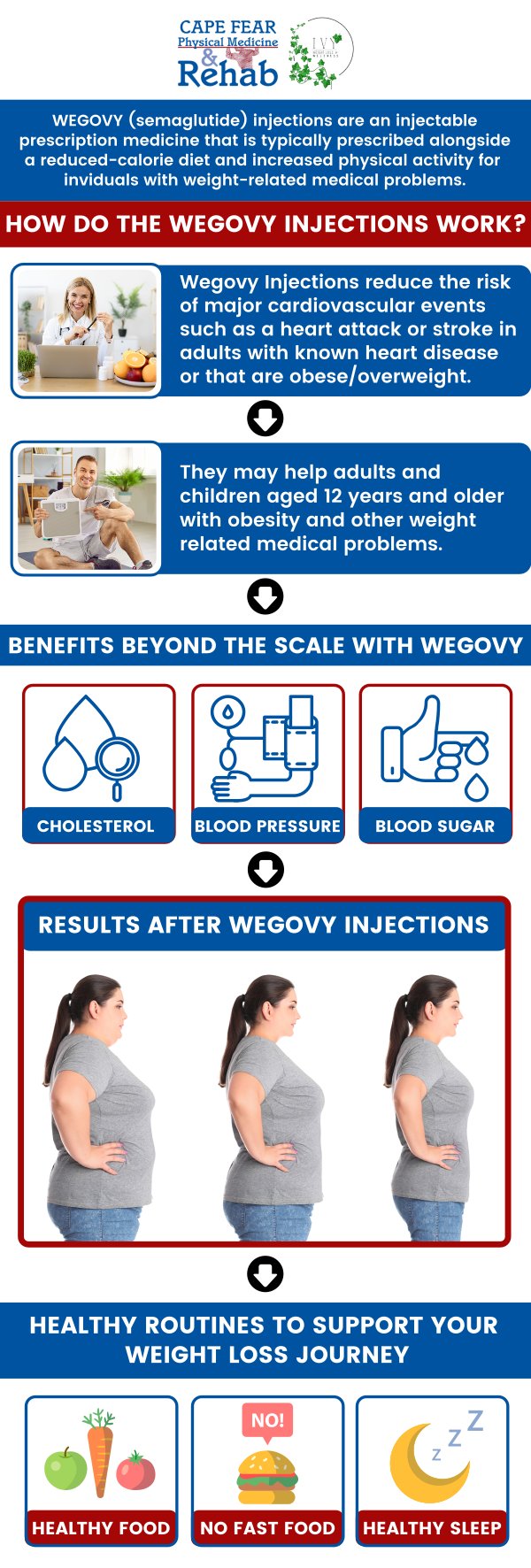
Table of Contents:
How Does Dr. Meisha K. Abbasinejad, MD, Tailor the Wegovy Treatment to Your Specific Needs?
What is the Difference Between the Wegovy Pill and the Wegovy Shot?
Which Form of Wegovy is More Convenient for Your Lifestyle: The Pill or the Shot?
Timeline for Results: How Fast Do the Pills Work Compared to the Shots?
Are There Any Side Effects of Wegovy Pills Versus the Shot?
How Does Dr. Abbasinejad Help Reduce and Manage Side Effects?
How Do I Know if the Wegovy Pill or Shot is the Right Medical Fit for Me?
In the evolving landscape of medical weight loss, patients in Fayetteville, NC, and surrounding areas turn to Dr. Meisha K. Abbasinejad, MD, at Cape Fear Physical Medicine and Rehab for expert guidance. As a Board-Certified Obesity Medicine specialist with over 18 years of experience, Dr. Abbasinejad offers a comprehensive Medical Weight Loss & Wellness Program that goes beyond simple prescription writing. With the recent introduction of oral semaglutide options (often referred to as the “Wegovy pill”) alongside the established injectable form, understanding which option aligns with your physiology and lifestyle is crucial.
Dr. Abbasinejad approaches weight loss through a holistic, “whole-person” lens rather than a one-size-fits-all protocol. Her practice, Cape Fear Physical Medicine and Rehab, integrates medical management with Lifestyle Medicine pillars to ensure sustainable results.
1. Comprehensive Initial Evaluation:
The tailoring process begins with an in-depth consultation. Dr. Abbasinejad does not merely check your BMI; she evaluates your metabolic health, previous weight loss attempts, and co-occurring conditions such as diabetes, hypertension, or joint pain. This thorough history helps determine if a GLP-1 receptor agonist like Wegovy is safe and appropriate for you.
2. The Lifestyle Medicine Approach:
Dr. Abbasinejad tailors the medication regimen to support a broader lifestyle overhaul. She creates a Personalized Action Plan that addresses six key pillars:
• Nutrition: Customizing dietary changes that mitigate medication side effects while maximizing satiety.
• Physical Activity: Developing an exercise routine that accommodates any existing musculoskeletal issues (a specialty of her physical rehab background).
• Stress Management & Sleep: Addressing cortisol levels and sleep hygiene, which are critical for weight loss success.
3. Precision Dosing and Formulation:
Understanding that every patient responds differently to medication, Dr. Abbasinejad selects the administration method—pill or shot—based on your specific medical profile and compliance history. She adjusts titration schedules (the speed at which dosage is increased) to match your body’s tolerance, ensuring you receive the therapeutic benefit without overwhelming side effects.
While both the pill and the shot deliver semaglutide—a powerful hormone mimic that regulates appetite and blood sugar—they differ significantly in how they are taken and processed by the body.
The Wegovy Shot:
• Form: A pre-filled injection pen.
• Frequency: Administered once a week.
• Mechanism: Injected subcutaneously (under the skin) into the abdomen, thigh, or upper arm. This allows the medication to bypass the digestive system and enter the bloodstream directly.
• Storage: Must be kept refrigerated (36°F to 46°F) until use, though it can stay at room temperature for up to 28 days once the cap is removed or the pen is in use.
The Wegovy Pill (Oral Semaglutide):
• Form: A daily tablet (historically known as Rybelsus for diabetes, but high-dose oral formulations for weight loss are the new standard).
• Frequency: Taken once every single day.
• Mechanism: Absorbed through the stomach lining. Because the stomach is designed to break down substances, the pill utilizes a special absorption enhancer (SNAC) to get the drug into your system before it is destroyed by stomach acid.
• Storage: Can be stored at room temperature, making it shelf-stable and travel-friendly.
Convenience is subjective and depends entirely on your daily routine and personal preferences.
The Shot is Better For:
• The “Set It and Forget It” Personality: If you struggle to remember a daily medication, the weekly shot is far superior. You take it on a specific day (e.g., “Wegovy Wednesday”) and don’t have to think about it for the rest of the week.
• Those with Irregular Mornings: The shot can be taken at any time of day, with or without food.
• Patients with Needle Tolerance: The needle is ultra-fine and often painless, but it does require overcoming the psychological hurdle of self-injection.
The Pill is Better For:
• Needle Phobics: For patients who have significant anxiety around needles, the oral tablet removes a major barrier to treatment.
• Frequent Travelers: Because the pills do not require refrigeration, they are much easier to pack for long trips or vacations where access to a fridge might be unreliable.
• The Disciplined Morning Routiner: The pill comes with strict rules (see below). If you already have a structured morning routine, this fits in seamlessly.
The “Inconvenience” of the Pill:
The oral form has strict intake requirements to work effectively. You must take it:
1. On an empty stomach immediately upon waking.
2. With no more than 4 ounces of plain water.
3. Wait at least 30 minutes before eating, drinking (even coffee), or taking other medications.
Violating these rules can render the medication ineffective.
The Shot:
Patients often report feeling the appetite-suppressing effects of the injection relatively quickly, sometimes within the first week or two of the starting dose (0.25 mg). However, significant weight loss typically begins after the body adjusts and the dosage is titrated up to the therapeutic levels (1.7 mg or 2.4 mg), which takes about 3 to 4 months.
The Pill:
The timeline for oral semaglutide can be slightly slower regarding the onset of “feeling” the drug, primarily because of the titration schedule. The oral dose starts low (e.g., 3 mg or 1.5 mg) to acclimatize the stomach and increases monthly.
• Comparison: Clinical trials suggest that while the injection might show a slightly faster initial drop in some patients due to direct absorption, the long-term results (at 68 weeks) are comparable. High-dose oral semaglutide has shown weight loss results nearing those of the injection (approx. 15% body weight loss) when taken perfectly.
• Verdict: Both methods require patience. They are not quick fixes but long-term metabolic adjustments.
The side effect profile is remarkably similar because the active ingredient (semaglutide) is the same. The most common issues are gastrointestinal.
• Common Side Effects (Both): Nausea, diarrhea, vomiting, constipation, stomach pain, headache, fatigue, and heartburn.
• Pill-Specific Nuances: Some patients report slightly higher rates of nausea or stomach pain with the pill because the medication sits directly in the stomach to be absorbed. Conversely, some find the daily lower spike of the drug easier to manage than the weekly “peak” of the injection.
• Shot-Specific Nuances: Injection site reactions (redness, itching at the spot of the shot) can occur but are generally mild.
Dr. Abbasinejad’s expertise in Obesity Medicine allows her to proactively manage these side effects so patients don’t abandon treatment.
1. Slow Titration: She strictly adheres to a “start low, go slow” philosophy. By increasing the dosage gradually over months, she allows your body to build a tolerance to the medication, significantly reducing the risk of severe nausea.
2. Dietary Modification: Through her wellness program, she advises patients on what not to eat. High-fat, greasy, or sugary foods often trigger Wegovy side effects. She guides patients toward nutrient-dense, easily digestible foods.
3. Supportive Care: Dr. Abbasinejad can prescribe anti-nausea medication for the initial adjustment period if necessary.
4. Regular Monitoring: Her clinic provides follow-up appointments to monitor your reaction. If side effects are persistent, she may pause the dosage increase or switch the delivery method.
Determining the “right fit” is a decision made during your consultation at Cape Fear Physical Medicine and Rehab. You might be a better candidate for the Shot if:
• You have a history of poor medication adherence (forgetting daily pills).
• You have gastrointestinal absorption issues (like gastroparesis or history of gastric bypass) which might make the pill less effective.
• You want the highest proven efficacy data available currently.
You might be a better candidate for the Pill if:
• You have a severe phobia of needles.
• You travel constantly and cannot maintain the “cold chain” (refrigeration) required for injections.
• You prefer a daily ritual to keep you mindful of your weight loss journey.
Next Steps:
To start your personalized journey, schedule an appointment with Dr. Meisha K. Abbasinejad. Her team will review your insurance coverage, discuss the specific costs (as pricing can vary between the pill and shot depending on your plan), and map out a Medical Weight Loss & Wellness Program designed for your long-term success. For more information, contact us or schedule an appointment online. We are conveniently located at 1540 Purdue Dr, Ste. 200, in Fayetteville, NC 28303.

Check Out Our 5 Star Reviews


Additional Services You May Like
▸ Weight Loss & Wellness Program
▸ Botox for Migraine
▸ EMG Nerve Conduction Studies
▸ Epidural Steroid Injections
▸ Radiofrequency Ablation
▸ Rehabilitation Consultations
▸ Facet Injections
▸ Sacroiliac Joint Injections
▸ Joint Injections
▸ Genicular Nerve Blocks
▸ Prosthetic Evaluation/Management
▸ Adjuvant Therapy/Care
▸ Spasticity Management
▸ Stroke Treatment
▸ Multiple Sclerosis
▸ Spinal Cord Injury
▸ Traumatic Brain Injury
▸ Lifestyle Medicine
▸ Phentermine
▸ Qsymia
▸ Contrave
▸ Lipo Injection
▸ B12 Injections

Additional Services You May Like
▸ Weight Loss & Wellness Program
▸ Botox for Migraine
▸ EMG Nerve Conduction Studies
▸ Epidural Steroid Injections
▸ Radiofrequency Ablation
▸ Rehabilitation Consultations
▸ Facet Injections
▸ Sacroiliac Joint Injections
▸ Joint Injections
▸ Genicular Nerve Blocks
▸ Prosthetic Evaluation/Management
▸ Adjuvant Therapy/Care
▸ Spasticity Management
▸ Stroke Treatment
▸ Multiple Sclerosis
▸ Spinal Cord Injury
▸ Traumatic Brain Injury
▸ Lifestyle Medicine
▸ Phentermine
▸ Qsymia
▸ Contrave
▸ Lipo Injection
▸ B12 Injections


 Send Text
 How May I Help You?